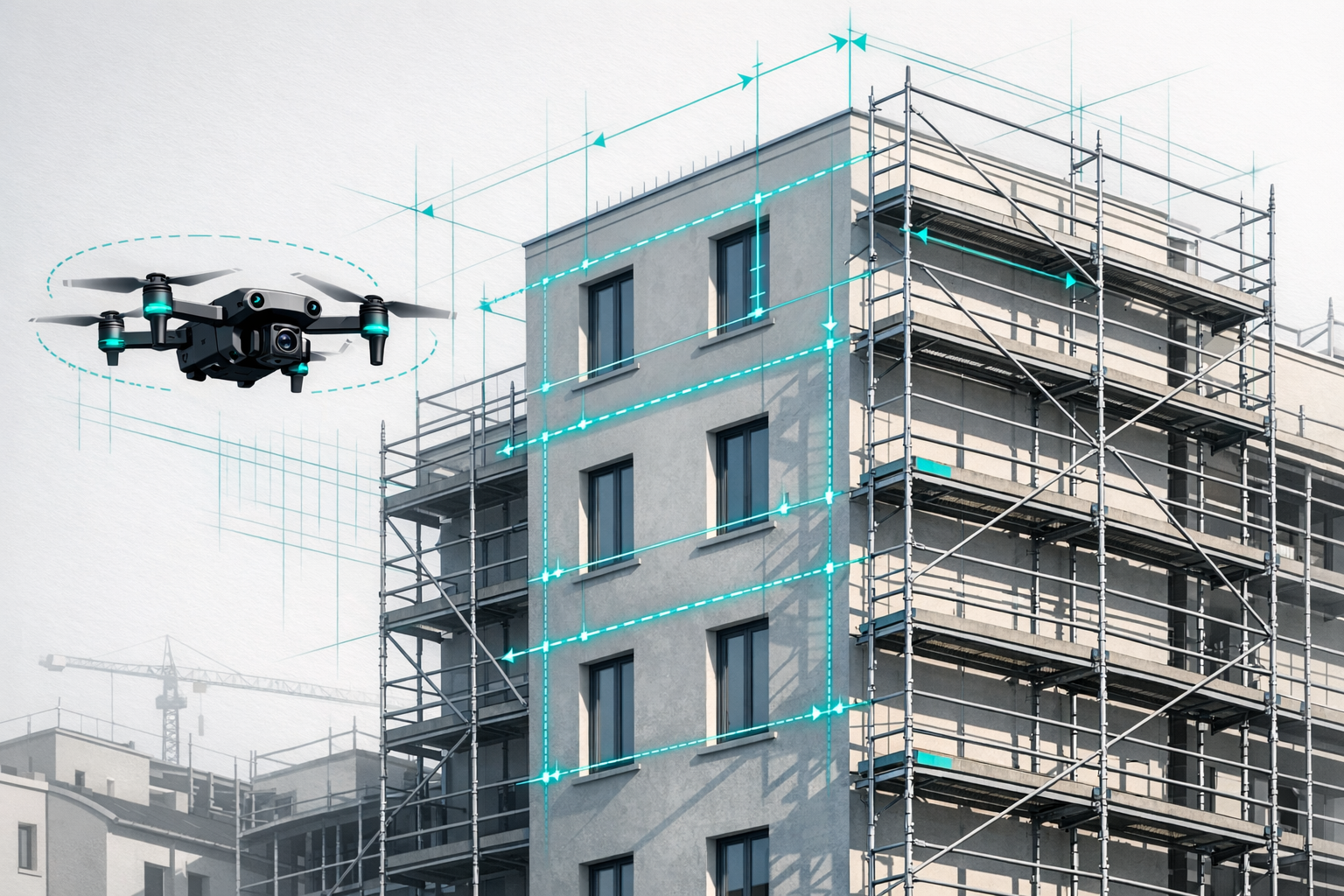
In scaffolding, accurate site measurements are everything: safety, material requirements, pricing - and ultimately whether a project is actually profitable. At the same time, traditional measuring on site is becoming more and more demanding: tight inner-city locations, complex facades, strict safety regulations, and constant time pressure on every job.
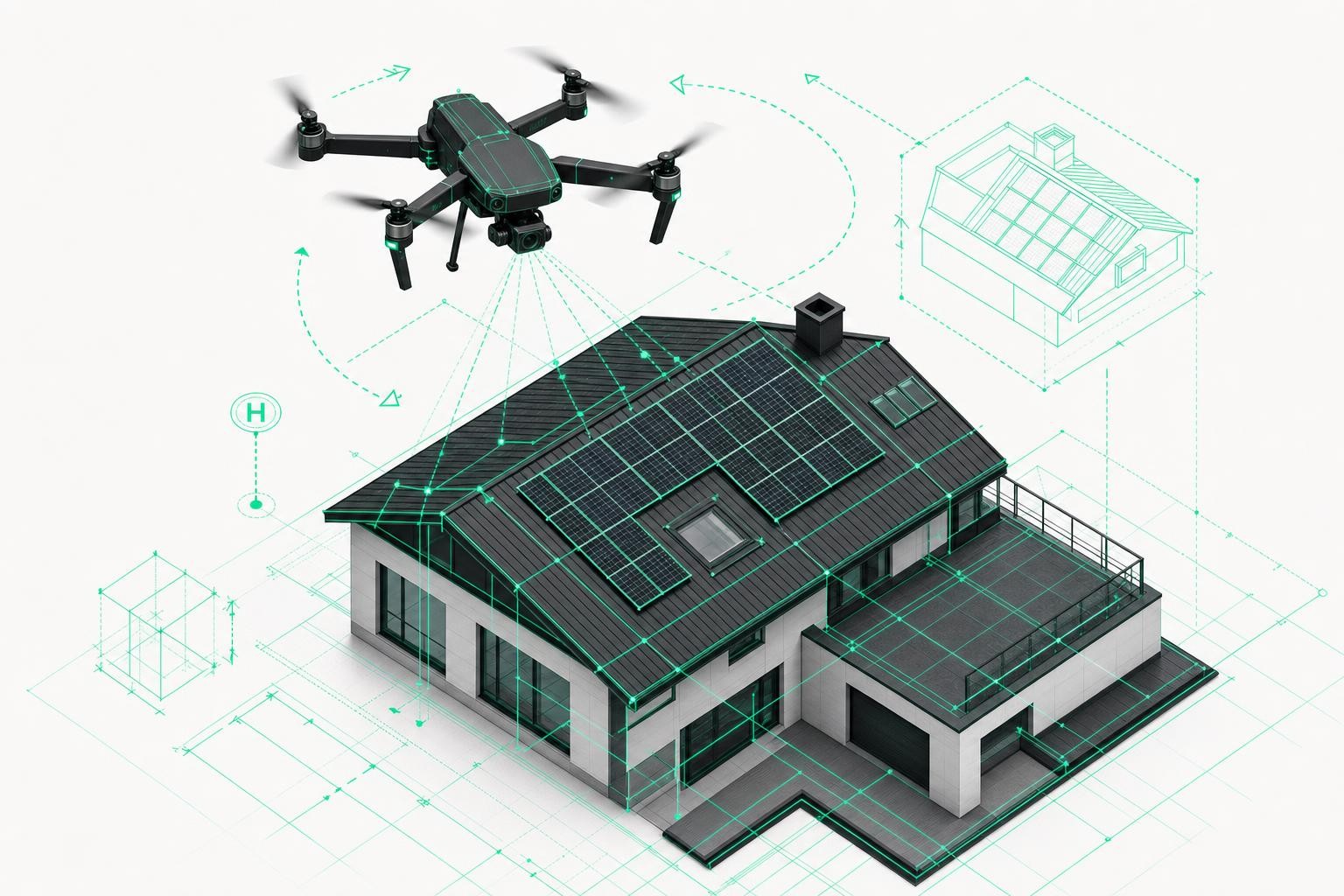
This is exactly where drones and digital surveying come in. Instead of walking around the building with a tape measure, laser, and notebook, one drone flight is enough. The images are uploaded to a cloud platform like Airteam, where precise 3D models and facade measurements are generated automatically - including data export, for example for Scaffmax.
In this article, we walk you through 5 typical scenarios in scaffolding where drone-based measurements give you a clear competitive edge.
Why use drone-based measurements in scaffolding?
Before we get into the practical examples, here are the hard facts:
- Up to 90% time savings compared to manual measurements on site
- Centimeter-accurate measurement of the facade - even in hard-to-reach areas
- Standards-compliant basis for planning and billing, digitally documented
- Increased safety: All measurements are taken from the ground, no climbing just to measure
- Direct integration into scaffolding software such as Scaffmax via suitable export formats
Instead of rule-of-thumb estimates and hand-drawn sketches, you get a digital facade survey that lets you clearly substantiate your quotations, material lists, and change orders.
1. Renovating apartment buildings: facade measurements in minutes instead of hours
Typical scenario:
You are asked to erect full facade scaffolding on a 4-6 storey apartment building - often in a dense urban setting, with balconies, bays, dormers, and extensions. Manual measuring on site easily takes 1-2 hours and is still prone to errors.
With drone-based measurement:
- The drone flies once around the building and captures all facade surfaces, projections, openings, and connection points.
- The images are uploaded to the Airteam platform and automatically processed into a 3D facade model.
- You then digitally measure all lengths, heights, and areas, including balconies, bays, and roof overhangs.
- If you wish, you receive a facade report with all relevant dimensions as a PDF and CAD data.
Your advantage in scaffolding:
- Realistic quantity takeoff (m² of facade area, linear meters of scaffolding, special constructions)
- Clean, transparent calculations - especially for complex older buildings
- You reduce the risk of rework because you literally have the building "in your pocket" in digital form
2. Industrial scaffolding and tall structures: safe surveying without working at height
Typical scenario:
Hall facades, silos, chimneys, or industrial plants are often difficult or impossible to fully measure from the ground. At the same time, safety requirements are extremely high.
With drone-based measurement:
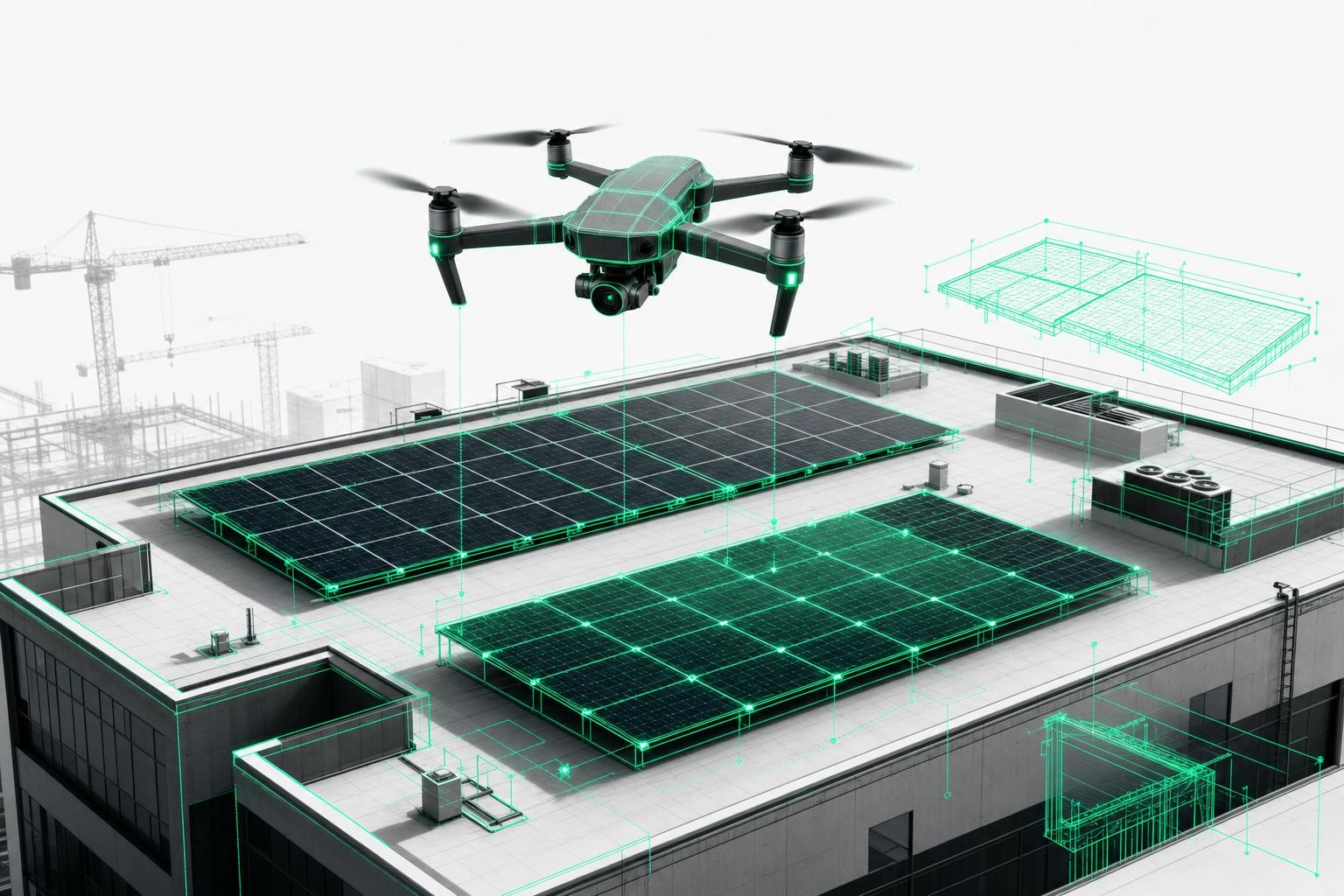
- The drone easily reaches high and hard-to-access areas - even over obstacles.
- In a single flight you capture height differences, extensions, pipework, ladders, and edges.
- The 3D model shows you exactly where you need brackets, bridges, or cantilevers.
Your advantage in scaffolding:
- No risky climbs just for measuring - the entire team stays safely on the ground.
- Fewer site visits, because you can re-measure anything you need in the digital model.
- Better planning of special constructions, for example for pipe bridges or plant components that must be scaffolded over.
3. Complex facades with many details: detect clashes early instead of on site
Typical scenario:
Single-family homes are often straightforward - but listed buildings, hotels, or office complexes have bays, cornices, canopies, conservatories, loggias, and all kinds of extensions. Here, the effort required for measurements on site escalates quickly.
With drone-based measurement:
- The drone documents all facade details in high-resolution images.
- In the 3D model, you can measure every edge, corner, and projection precisely.
- You can see in advance where the scaffolding needs to be moved forward, set back, or adapted.
Your advantage in scaffolding:
- You plan the scaffolding to be clash-free - for example with canopies, signage, or glass surfaces.
- You avoid expensive on-site adjustments because conflicts become visible early.
- In discussions with site managers, architects, or heritage authorities, you can rely on robust 3D data instead of sketches.
4. Energy-efficient refurbishments with multiple trades: one digital measurement for everyone
Typical scenario:
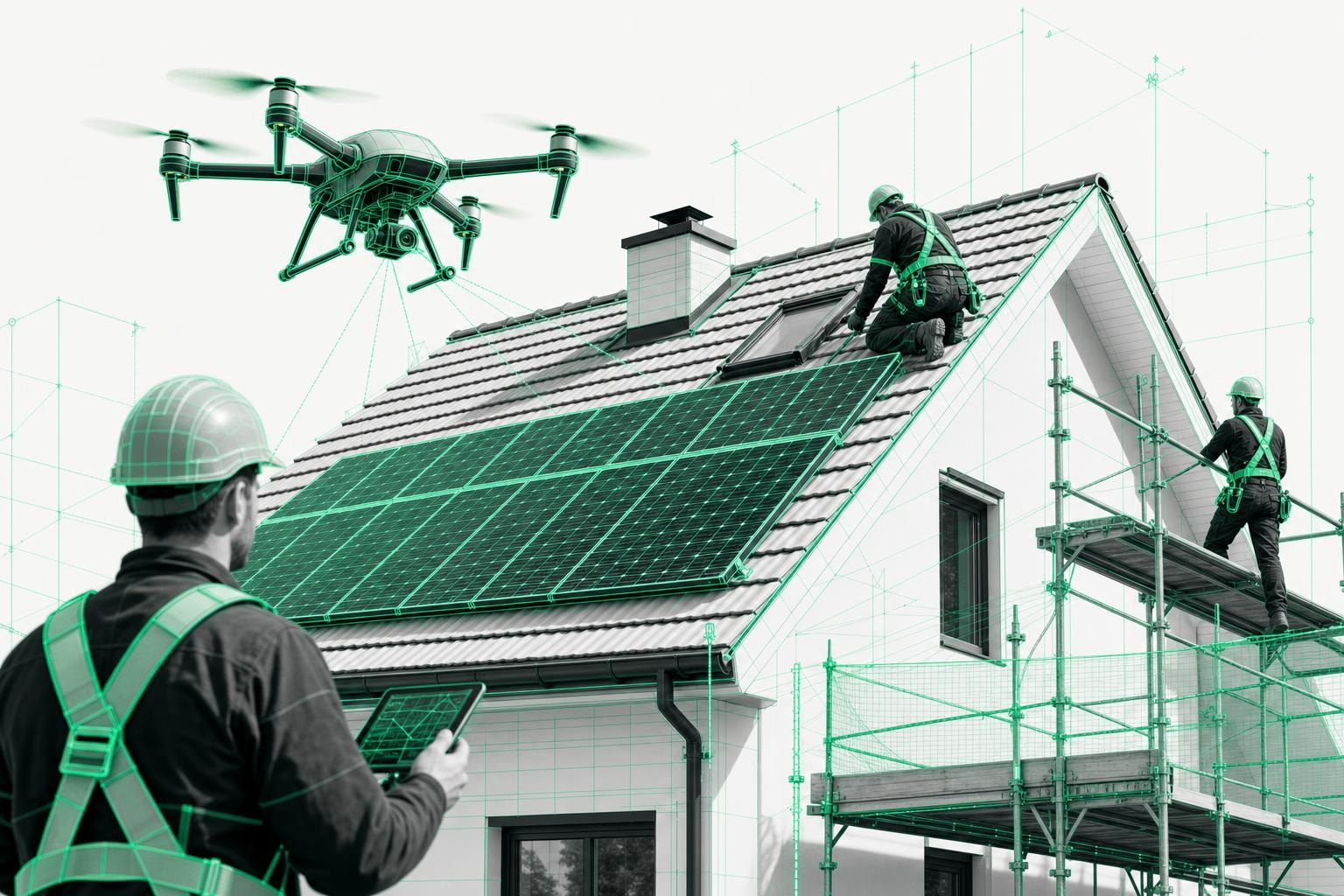
The facade is being insulated, the roof renewed, maybe photovoltaic panels and new windows are being installed as well. Several trades are working at the same time or one after another - and as the scaffolding contractor, you need to ensure that everyone can work properly from "your" scaffolding.
With drone-based measurement:
- A single drone flight creates a shared 3D building model.
- This model can be shared with roofers, solar installers, or facade contractors with just a few clicks.
- All trades plan based on the same data set, including obstacles, roof structures, and facade features.
Your advantage in scaffolding:
- You design your scaffolding so that all trades can work optimally - without constant modifications.
- Fewer change orders and reconstruction work, because planning is coordinated using one digital model.
- You position yourself with the client as a modern partner who actively supports digital coordination.
5. Change orders and final measurements: avoid disputes with 3D documentation
Typical scenario:
During the project, the scope of work changes: additional areas are scaffolded, standing times are extended, stair towers or protective roofs are added. At the final measurement stage, disputes with clients, general contractors, or planners are common.
With drone-based measurement:
- You can regularly document the scaffolding with the drone throughout the project.
- This creates a complete, photorealistic 3D record of each construction phase.
- For the final measurement, you use the digital model to determine exactly which areas and heights were actually scaffolded.
Your advantage in scaffolding:
- You have an objective basis for change orders and billing - with both image and 3D proof.
- Arguments like "there was no scaffolding there" or "that area was smaller" are quickly resolved.
- Your cash flow improves because invoices are approved faster and with fewer reductions.
How does a drone-based measurement with Airteam work in practice?
Fly the drone
- Either you fly yourself (for example with a DJI drone) or you book a pilot from the Airteam network.
- A typical flight around a building takes about 10 minutes.
Upload the images
- You upload the images to the Airteam Fusion Platform.
- AI photogrammetry automatically generates an accurate 3D building model, including facade measurements.
Measure digitally and export
- You measure all relevant lengths, heights, and areas directly in your browser.
- For scaffolding, you can export facade elevations and CAD data, which can be used further in tools like Scaffmax.
Plan, quote, document
- Based on the digital measurements, you prepare your quotation, plan materials and logistics, and later document the completed work.
No expensive hardware, no complicated CAD training: the platform is designed so that you can get started immediately after a short introduction.
FAQ: Common questions about drone-based measurements in scaffolding
Do I absolutely need my own drone as a scaffolding contractor?
No. You can either:
- fly yourself with a starter kit (drone + training), or
- book a certified pilot from the Airteam network for individual projects.
This way you can test the technology first and then decide later whether it is worth investing in your own drone.
How accurate are drone-based measurements?
The Airteam platform delivers centimeter-accurate 3D models. In practice, the measurement data is significantly more accurate than traditional sketches or satellite images - and reliable enough to base your quotations, planning, and billing on it.
Can I use the data in my scaffolding software?
Yes. Airteam offers special export formats for scaffolding, including for Scaffmax and other CAD solutions. You can also simply share the 3D model via a link with partners, without sending files back and forth.
Are there legal complications when using drones?
For typical residential and commercial scaffolding projects, an EU drone license (A2) plus suitable insurance is usually sufficient. Airteam supports you with training and practical tips so that you can fly safely and in compliance with regulations.
Conclusion: drone-based measurement is becoming the standard in scaffolding
Whether you are working on an apartment building, an industrial facility, or a complex refurbishment: drone-based measurements make your scaffolding business faster, safer, and more precise. You save hours of on-site measuring, avoid costly planning errors, and gain a digital record that strongly supports you during bidding and billing.
If you want to take the next step toward digitalization as a scaffolding contractor, getting started is easier than you might think: fly a drone (or have one flown), upload the images - the AI does the rest.
Start now with digital drone-based facade measurements and test Airteam for free - and see for yourself how much easier scaffolding becomes when you can rely on precise 3D measurements.