The boom in photovoltaic systems is sending more and more people up onto roofs - and not always with the necessary expertise. The Social Accident Insurance Institution for the Construction Industry (BG BAU) and the Central Association of the German Roofing Trade (ZVDH) have therefore launched the "Safe on the Roof" initiative to highlight fall hazards and promote professional working methods. The backdrop: thousands of reported fall accidents every year. In the first ten months of 2025 alone, BG BAU recorded over 6,000 fall incidents, more than a third of them from roofs, many caused by breaking through areas that were not designed to be walked on - including accidents related to PV installations. (buildingnet.de)
For roofers, solar installers and PV planners, this raises a crucial question: How can solar systems be installed on roofs in a professional, economical and maximally safe way? A key lever is the consistent digitalization of surveying and planning - and this is precisely where Airteam comes in.
1. What the "Safe on the Roof" initiative makes clear
The message from BG BAU and ZVDH is crystal clear:
- Work on roofs belongs in the hands of qualified professionals.
- Most serious accidents occur where load-bearing capacity and resistance to breaking through are misjudged - for example on skylight panels, corrugated asbestos sheets or old translucent roof strips. (buildingnet.de)
- With the PV boom, an increasing number of non-professionals are climbing onto roofs, often without any understanding of structural engineering, roof construction or safety equipment.
The initiative combines an awareness campaign on social media with new practical aids and training materials specifically for the roofing trade. The goal: prevent accidents by ensuring work is done like the professionals - properly planned, secured and documented. (buildingnet.de)
This is exactly where digital surveying by drone closes the gap between occupational safety, professional planning and efficient project execution.
2. Professional execution starts with planning on the ground
Whether pitched roof or flat roof: professional PV work does not begin when someone puts a ladder up - it starts much earlier, with surveying and planning. This includes:
- Exact roof dimensions and geometries for structural analysis, module layout, attachment points and walkways
- Documentation of hazard zones such as skylights, old trapezoidal sheets or panels that are not safe to walk on
- Safe access routes and anchor points for fall protection systems
- Coordination with other trades (scaffolding, carpentry, sheet metal work) based on consistent data
If these fundamentals are missing or only roughly estimated, the result on the roof is improvisation - a critical safety and cost risk.
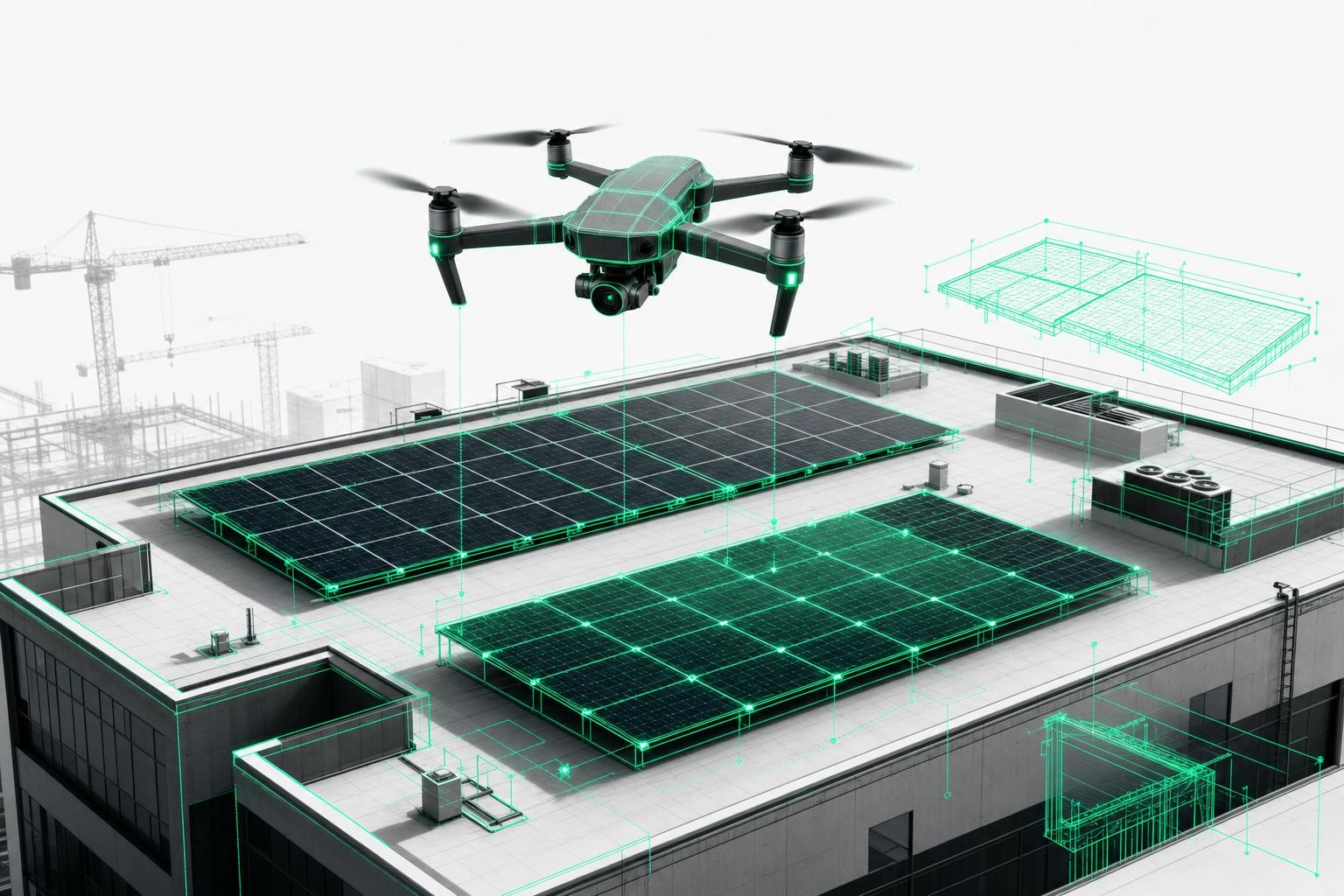
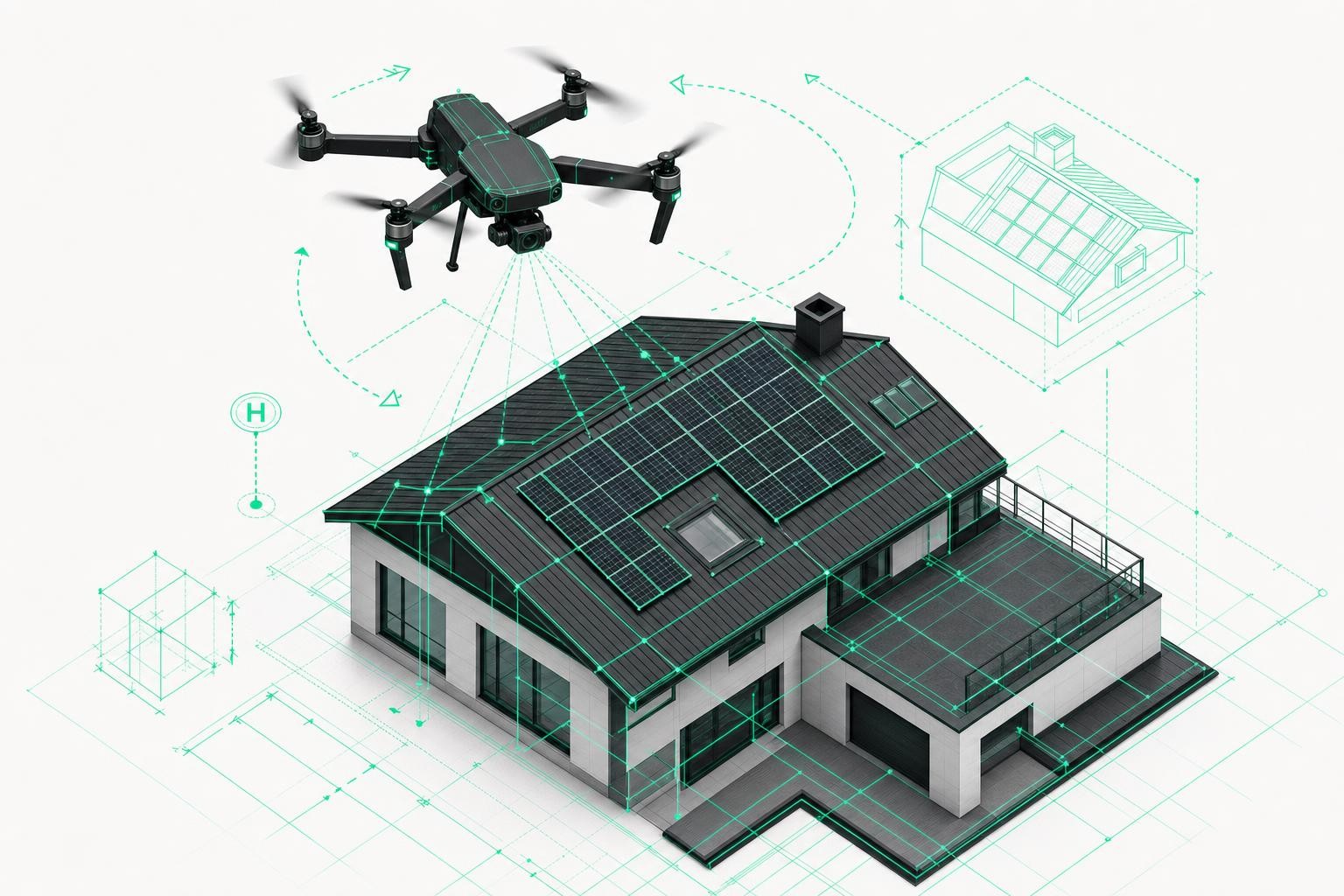
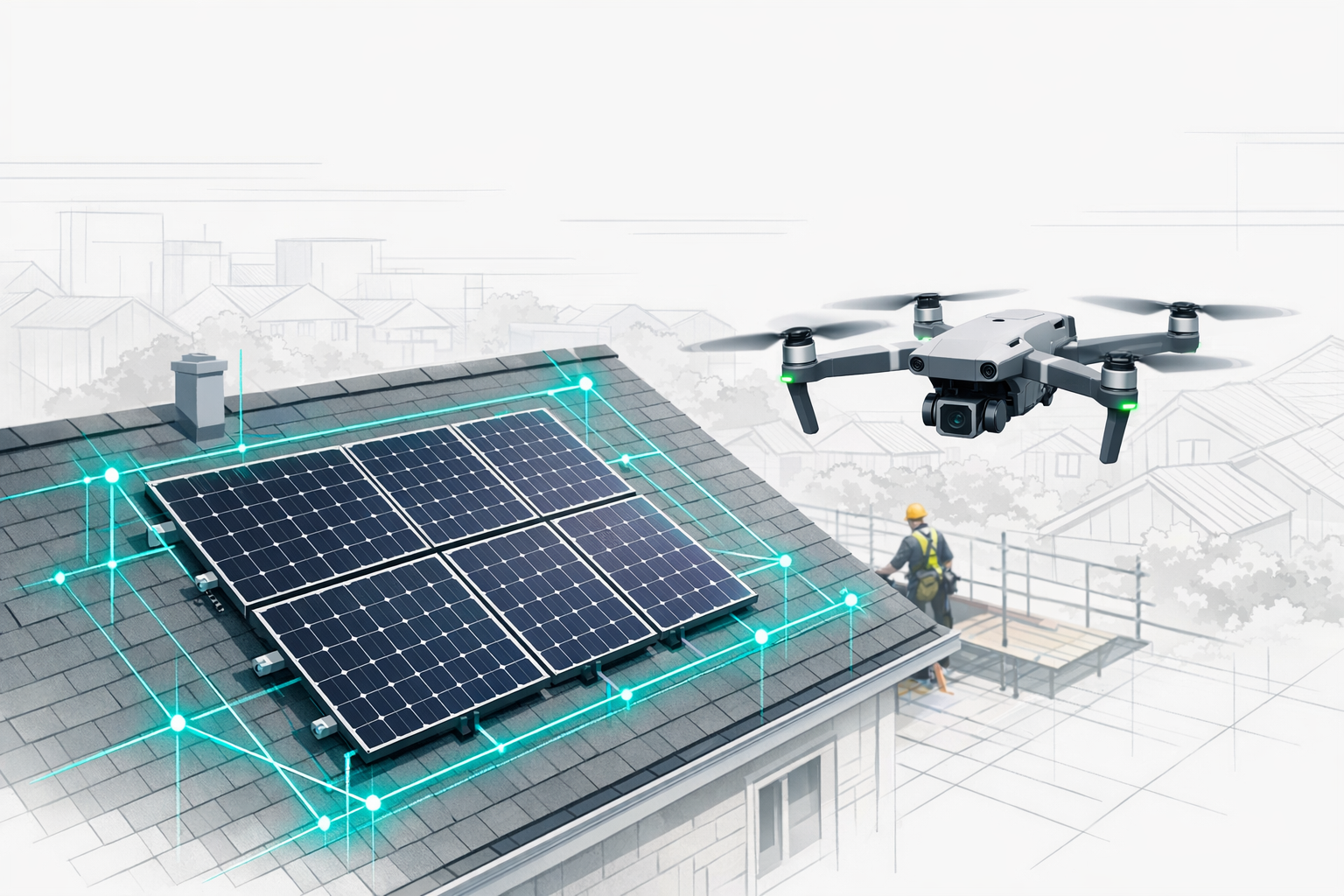
With Airteam's drone-based roof surveying, this crucial step can be carried out from the ground - quickly, reproducibly and fully digitally.
3. Drone surveying instead of roof climbing: safety from day one
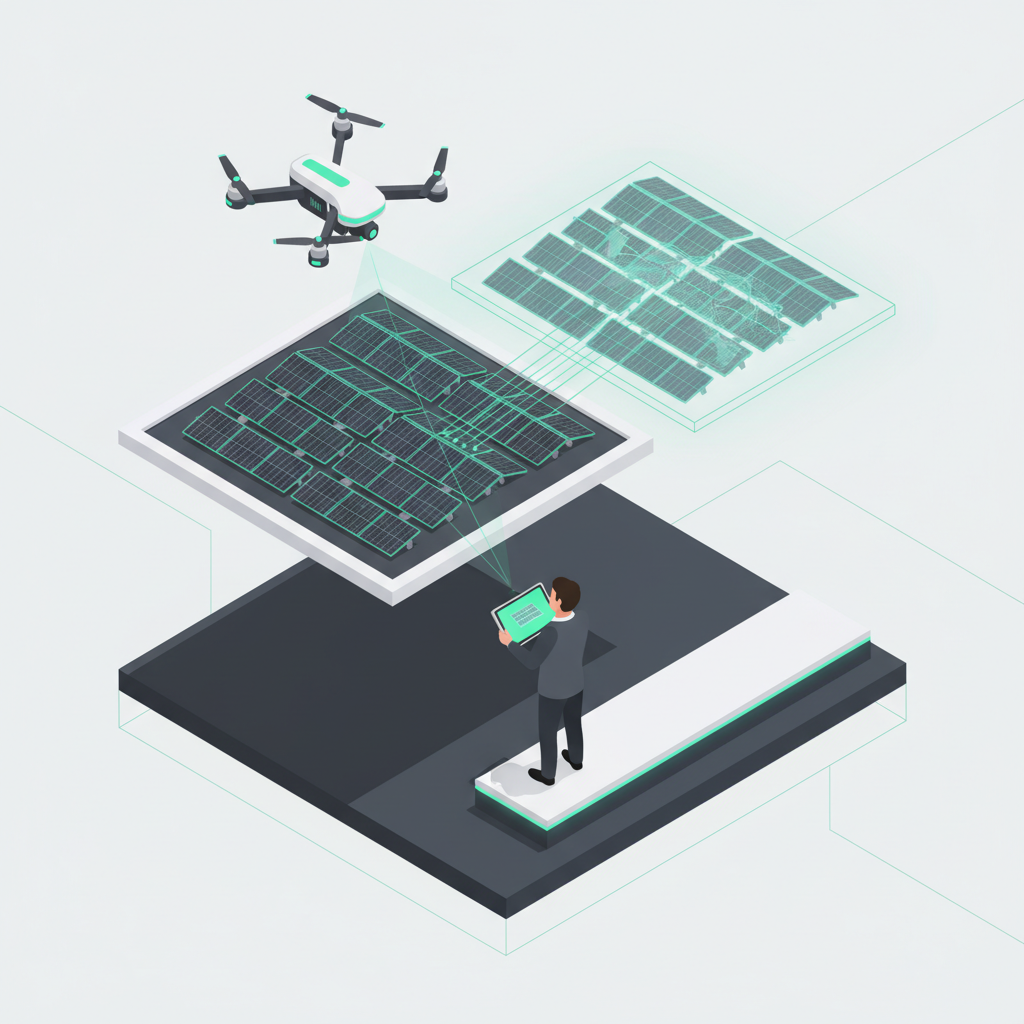
Airteam digitalizes and automates building and roof surveying for trade businesses using drones and AI-powered 3D modeling.
Concretely, this means for your business:
-
Roof capture without stepping onto the roof
The survey is carried out via drone flights from ground level. This reduces fall risks in the most sensitive project phase - the initial site survey - virtually to zero. -
Centimeter-accurate 3D models and survey reports
From the images, Airteam generates a standards-compliant 2D/3D roof model within 24 hours, including slopes, areas, edges, structures and obstructions. -
Clear visibility of hazard zones
Skylights, glass sections, ladders, chimneys and roof openings are documented in the model. This allows you to define during planning where no one should walk, where work is permitted and where additional safety measures are required. -
Up to 90% time savings in surveying
Instead of hours of manual measuring from ladders, the drone flight and data upload are completed in just a few minutes. Companies that have switched from manual measurements to Airteam report time savings of up to 90% and significantly fewer reworks.
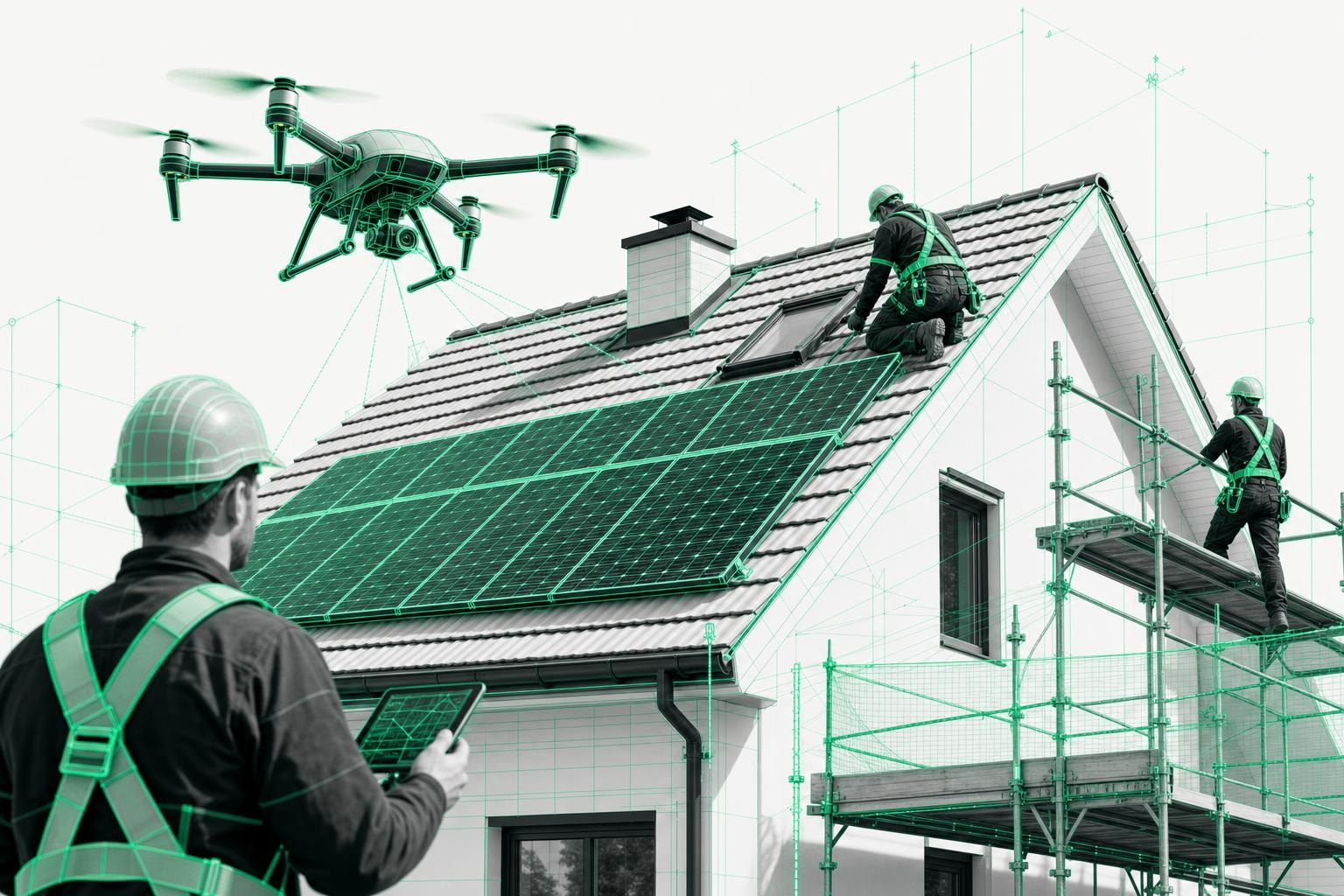
The result: far fewer people need to go onto the roof at all - and when they do, they go up there with a well-thought-out plan derived from the 3D data.
4. Professional PV design: from 3D roof geometry straight into the planning tool
For solar installers and PV designers, the next step is critical: turning the safe, digital survey into a professionally engineered system.
Airteam provides planning data that can be integrated directly into leading industry software, including:
- PV*SOL Premium (including low-poly and planarized models for both small and very large roof systems)
- Eturnity (3D models including roof, façade and surrounding environment)
- Sunny Design Pro (SMA)
- SolarMonkey (orthophotos and DSM for 2.5D planning)
- MF Dach, Codex (surveying and estimating for roofers)
- SEMA, Scaffmax, AutoCAD, SketchUp (for carpenters, scaffolders, architects)
Real-world examples show what this means in practice:
- Solit Energie AG now designs photovoltaic systems using centimeter-precise 3D roof models from Airteam and can implement the design almost 1:1 on site - with massive time savings and no rework.
- ProElectrify achieves 63% time savings in design and proposal preparation by using drone surveying and Airteam data in Sunny Design, and cuts measurement errors by more than 90%.
- Svea Solar was able to almost halve design time for solar systems, increase energy yield by 15% and at the same time reduce project costs by around 25% - all while presenting a much more professional image to customers.
This is what professional work, in the spirit of the "Safe on the Roof" initiative, looks like in practice: technically robust, standards-compliant, documented - and safe from day one.
5. How Airteam supports the goals of BG BAU and ZVDH
The initiative from BG BAU and ZVDH calls for roof work to be carried out professionally, carefully planned and secured with appropriate protective measures. (buildingnet.de)
Airteam directly supports these goals:
-
Lower risk during surveying
The risky "first climb" onto the roof is no longer necessary - measurement is performed by drone from the ground. -
Better planning of safety measures
Complete 3D data allows scaffolding, walkways, anchor points, material storage areas and exclusion zones to be precisely defined in advance. -
Documentation for building owners and insurers
High-resolution imagery with timestamps documents the condition of the roof and façade before work starts - an important building block for minimizing liability, especially on PV projects. -
Profitability without compromising safety
With up to 90% time savings in surveying and far fewer reworks, the additional effort invested in safety and planning also pays off financially - a decisive argument for management and customers alike.
6. Checklist: 5 steps to safe, professionally executed PV work
For roofing and solar specialist companies that want to embed the "Safe on the Roof" message into their daily operations, the following practical checklist can help:
-
Only qualified professionals on the roof
Draw a clear line: no DIY work by customers on the roof, and no subcontractors without relevant qualifications. -
Digitally survey the roof - before anyone goes up
Commission or carry out a drone flight with Airteam, then analyze the 3D model and hazard zones. -
Carry out PV design within the 3D model
Plan module layout, shading, walkways and safety points in PV and roofing software (for example PV*SOL, Eturnity, Sunny Design, MF Dach). -
Define health and safety measures based on planning data
Scaffolding, personal protective equipment, fall-through protection and barriers are derived from the 3D data and incorporated into safety briefings. -
Document the project throughout its lifecycle
Use drone imagery to document construction progress so you can provide evidence at any time to clients, BG BAU and insurers.
Those who consistently follow these five steps not only work in line with the "Safe on the Roof" initiative, but also gain a significant edge in efficiency and quality for their business.
Conclusion: Safety, quality and profitability belong together
The initiative from BG BAU and ZVDH makes it clear that professionally executed work on roofs today means more than "just" craftsmanship on site. It starts with safe, digital surveying, moves through precise 3D planning and culminates in a cleanly documented, standards-compliant installation.
Airteam brings these aspects together:
- Safe surveying without stepping onto the roof
- Centimeter-accurate, standards-compliant 3D models within 24 hours
- Up to 90% time savings in surveying and proposal preparation
- Seamless integration into PV and roofing software
- Over 5,000 companies and more than 70,000 digitally surveyed projects
Anyone who wants solar installations to be "professionally executed" - whether as a building owner, property operator or trade business - should therefore not only ask about qualifications on the roof, but also about their digital capabilities on the ground.