The war in Iran has hit the construction sector hard. The industry is warning about rising prices across the board - both for materials and for transport to job sites due to more expensive fuel. For roofing companies this means: higher purchasing costs, an uncertain pipeline of projects and customers who think twice before investing.
But a crisis does not automatically mean stepping backwards. If you take the right measures now, you not only safeguard your business - you also build a real lead over your competitors through smart crisis management.
The market situation: According to a DIHK quick poll, 86% of the surveyed construction companies are reporting rising energy costs, three-quarters report higher material prices - the construction industry is hit harder than the economy-wide average. Whoever uses the right levers now will secure a decisive competitive advantage.
Tip 1: Analyse operating costs and cut them in a targeted way
Before you think about revenue, look at your costs. According to a flash survey by the DIHK, 86% of the construction companies surveyed report higher energy costs, and three quarters report higher raw material and material prices. This hits you directly - from bitumen and insulation materials through to diesel for your vehicles.
What you can do:
- Renegotiate supplier contracts and check alternatives
- Reduce fuel costs with optimised route planning as part of your business process optimization
- Build up stocks of critical materials in good time before prices climb further
Targeted measures like these help you reduce operating costs and stabilise your margins.
Tip 2: Digitise surveying processes and turn time into money
Every hour your team spends unnecessarily on a roof costs money and increases risk. In 2024 and 2025 alone, construction costs for conventional residential buildings rose by around three percent according to the Federal Statistical Office - manual processes add even more pressure on costs.
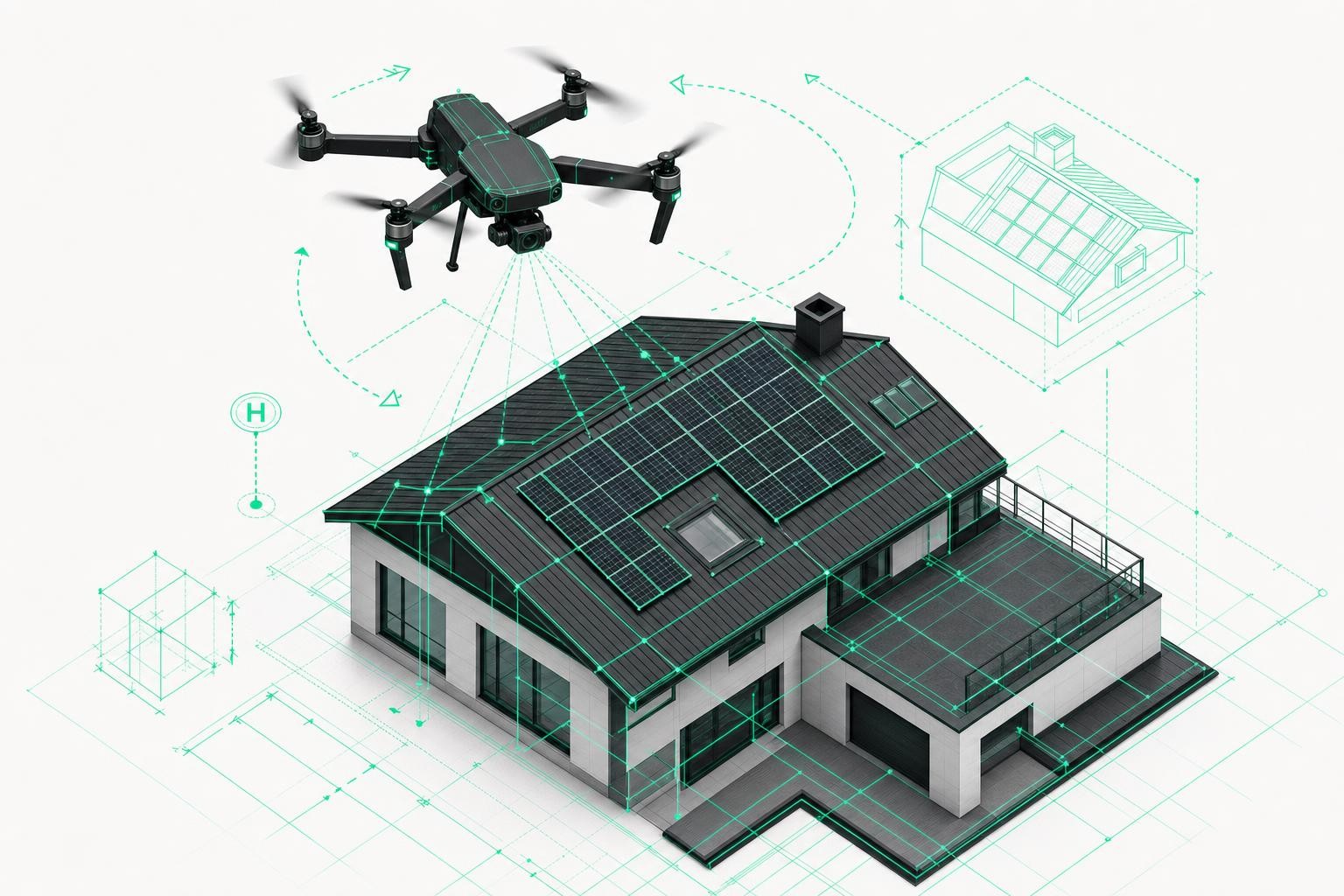
With the Airteam Fusion Plattform you create precise 3D surveys up to 90% faster from drone images - automatic, DIN-certified and without setting foot on the roof. What used to take half a day is now done by AI in minutes.
This delivers direct liquidity: more quotes in less time, fewer staff hours per project and more room to improve cash flow.
Read how this adds up in practice: Example calculation for a 5-person roofing company
Tip 3: Create quotes faster and more convincingly
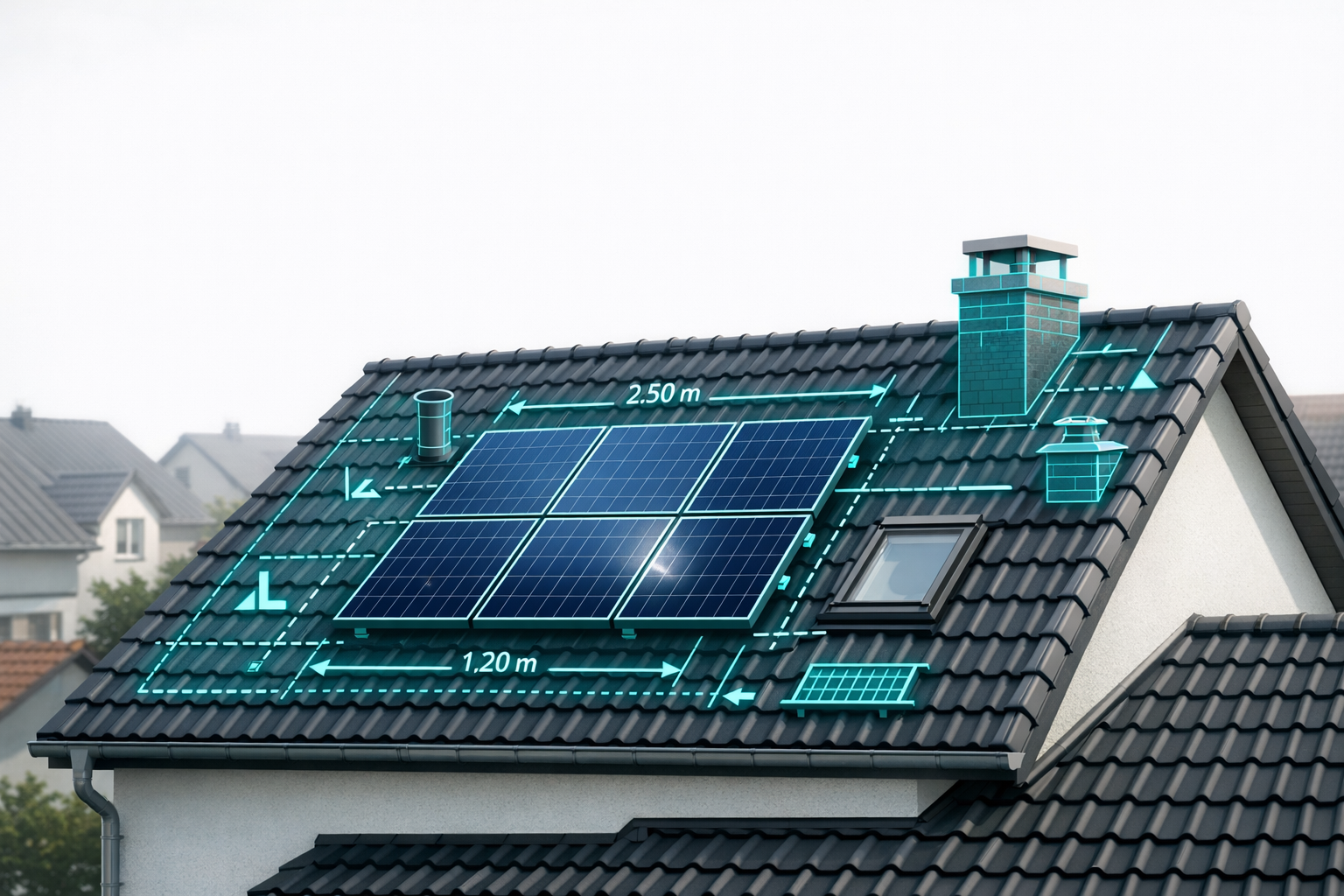
In uncertain times, speed is what counts. Customers choose the contractor who is first to send a professional, transparent quote. DIN-compliant, centimetre-accurate 3D models are available in less than 24 hours - ready to export into common estimation and planning software such as MF Dach, PV*SOL or AutoCAD.
The advantage: You win jobs before your competitor has even climbed onto the roof.
A fast, visually clear quote process not only supports lead generation, it also builds trust right from the first contact.
Tip 4: Secure liquidity - use flexible pricing models
Investments need to pay off quickly in a crisis. That is why Airteam offers flexible Flatrates (Fast, Pro, Max, Ultra Fusion) and Credits - you only pay for what you really need, without high fixed costs. For many businesses, the ROI period is just 3-12 months.
Tip: Use individual projects as your starting point before switching to a Flatrate - this lets you test the added value with no risk and helps you improve cash flow step by step.
Tip 5: Actively retain existing customers
Winning new customers costs five to seven times more than keeping existing ones. Right now, it really pays off to invest in customer retention:
- Proactively inform existing customers about funding programmes (e.g. BAFA, KfW)
- Offer regular maintenance and inspection services
- Impress during quote presentations with professional 3D building models - this builds trust and clearly sets you apart visually from your competition
Customers who know your digital process and your precision stay loyal - even if you have to adjust your prices. Strong customer retention is a key lever to increase competitiveness in difficult markets.
Tip 6: Focus on refurbishments and PV instead of new builds
Experts fear that the war in Iran will slow down new construction, which had only just started to pick up speed again. Refurbishments and photovoltaic installations, however, continue to see stable demand - driven by government incentives and rising energy prices that push homeowners to take action.
Your strategy: Position your business specifically for roof refurbishments and PV projects. With digital drone surveys that you can export directly into PV*SOL or Eturnity, you offer your customers fast, professional planning - and secure jobs in a growing segment.
This focus on attractive segments is a practical way to increase competitiveness even when the overall market is under pressure.
Tip 7: Make full use of digitalisation funding programmes
Digitalisation does not have to be a pure cost factor - it can be subsidised. The federal programme "go-digital" supports small and medium-sized businesses by covering up to 50% of the costs of digitalisation measures. Regional programmes and KfW financing can also be an option.
How other companies benefit from this combination is shown in the Airteam success stories - from roofers to solar installers who have become more efficient and more competitive through drone-based surveying.
Conclusion: Treat the crisis as an opportunity
Hopes for stabilisation in the construction sector evaporated abruptly in spring 2026 - a shock in energy prices hit the German construction industry with full force. But if you act with a clear head now, you can reduce costs, win contracts faster and retain customers for longer than your competitors.
The most important levers at a glance:
- ✅ Analyse operating costs and adjust prices
- ✅ Use digital surveys for more efficiency and fewer errors
- ✅ Speed up quote creation with AI-based tools
- ✅ Rely on flexible investment models for predictable liquidity
- ✅ Retain existing customers by offering real added value
- ✅ Focus on the growth segments refurbishment and PV
- ✅ Use funding programmes for digitalisation
Targeted business process optimization across these areas strengthens your crisis resilience and helps you reduce operating costs, improve cash flow and increase competitiveness in the long term.
How does the Iran war specifically affect my roofing business?
The conflict is driving energy and commodity prices up — from bitumen through insulation materials to transportation costs. At the same time, builders are delaying new construction projects, while demand for renovations and PV installations remains stable. Those who reduce operating costs and communicate intelligently can use this shift to their advantage.
Is a drone survey really worth it in times of crisis?
Right now it's especially worthwhile: you save up to 90% of the time on measurements, directly reduce personnel costs per project, and avoid costly mistakes. This preserves liquidity and at the same time increases bid precision. The ROI period for many companies is only 3-12 months.
What funding programs exist for digitizing my business?
The federal funding program "go-digital" supports small and medium-sized enterprises with up to 50% of consulting and implementation costs for digitization measures. Regional funding programs and KfW loans can also be used for investments in drone technology or software.
How can I keep customers despite higher prices?
Transparency is the key: clearly explain why material costs have risen, and at the same time highlight your added value — faster processing, precise planning, digital documentation. Customers who know your process and your quality are more loyal and are more likely to accept adjusted prices.