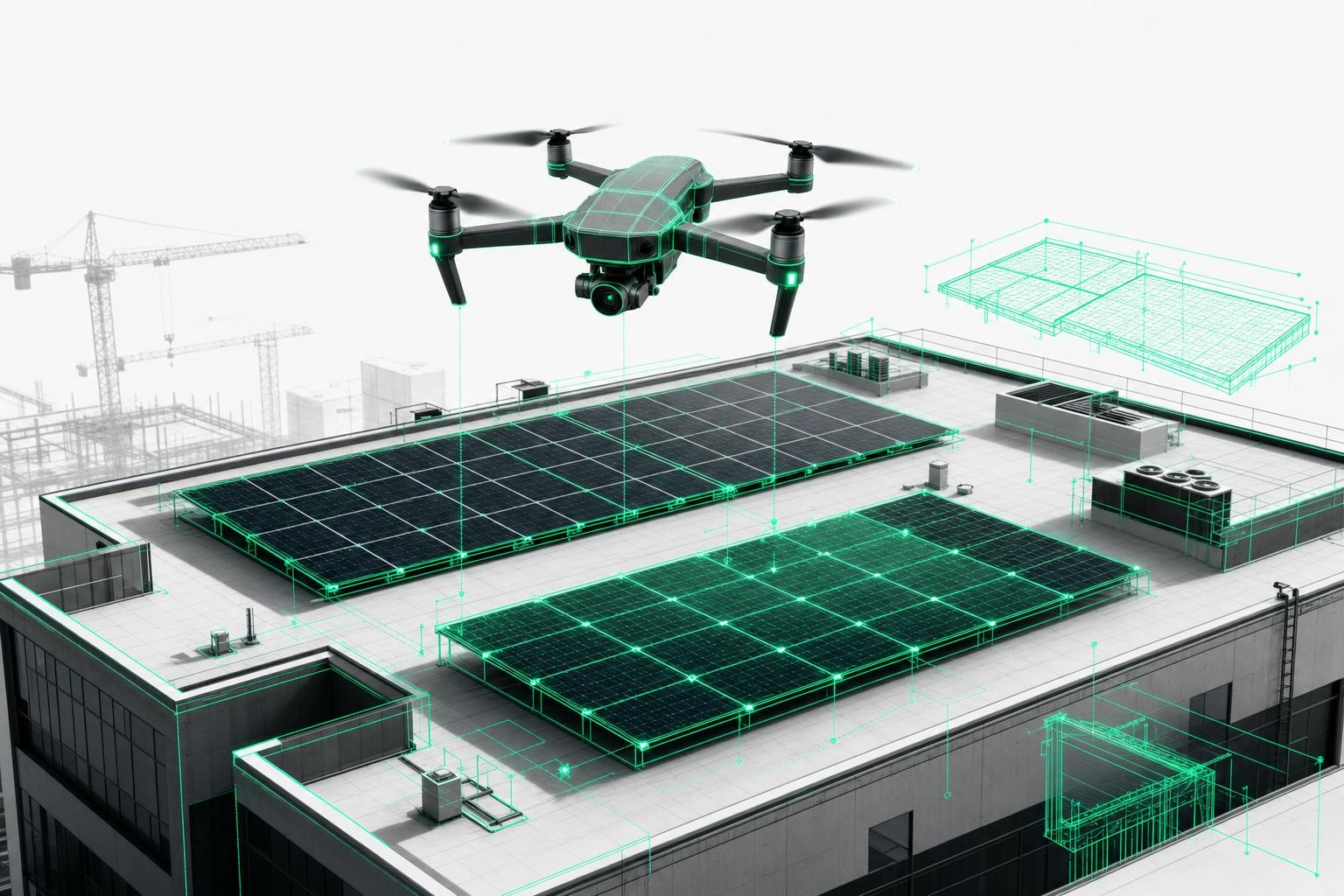
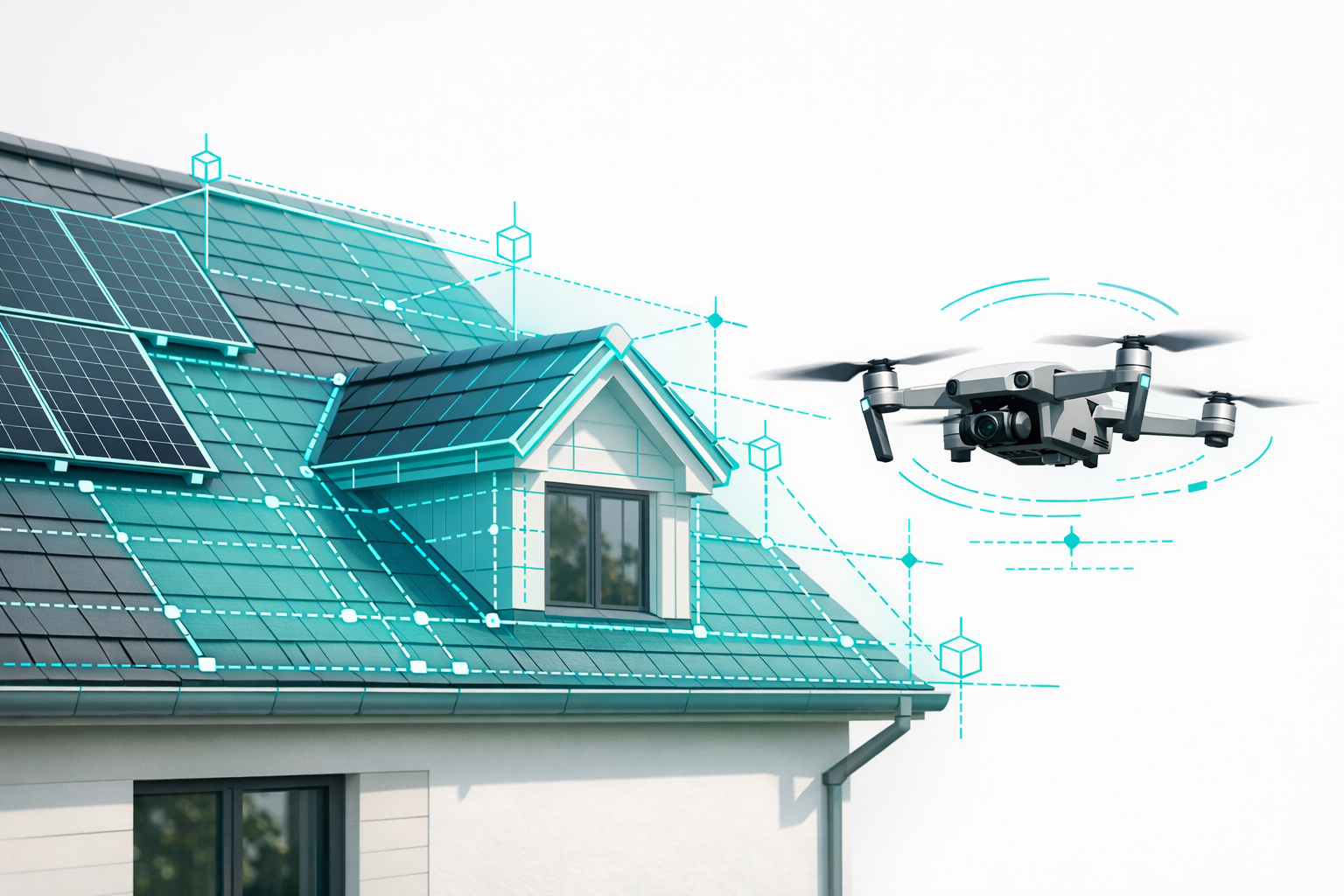
Dragging out the ladder, walking around the house, sketching things by hand, driving back later because you missed a dimension - that is still how roof measurement works in many companies today. At the same time, requirements for documentation, compliance with construction standards, and planning reliability are rising, especially with the boom in photovoltaics.
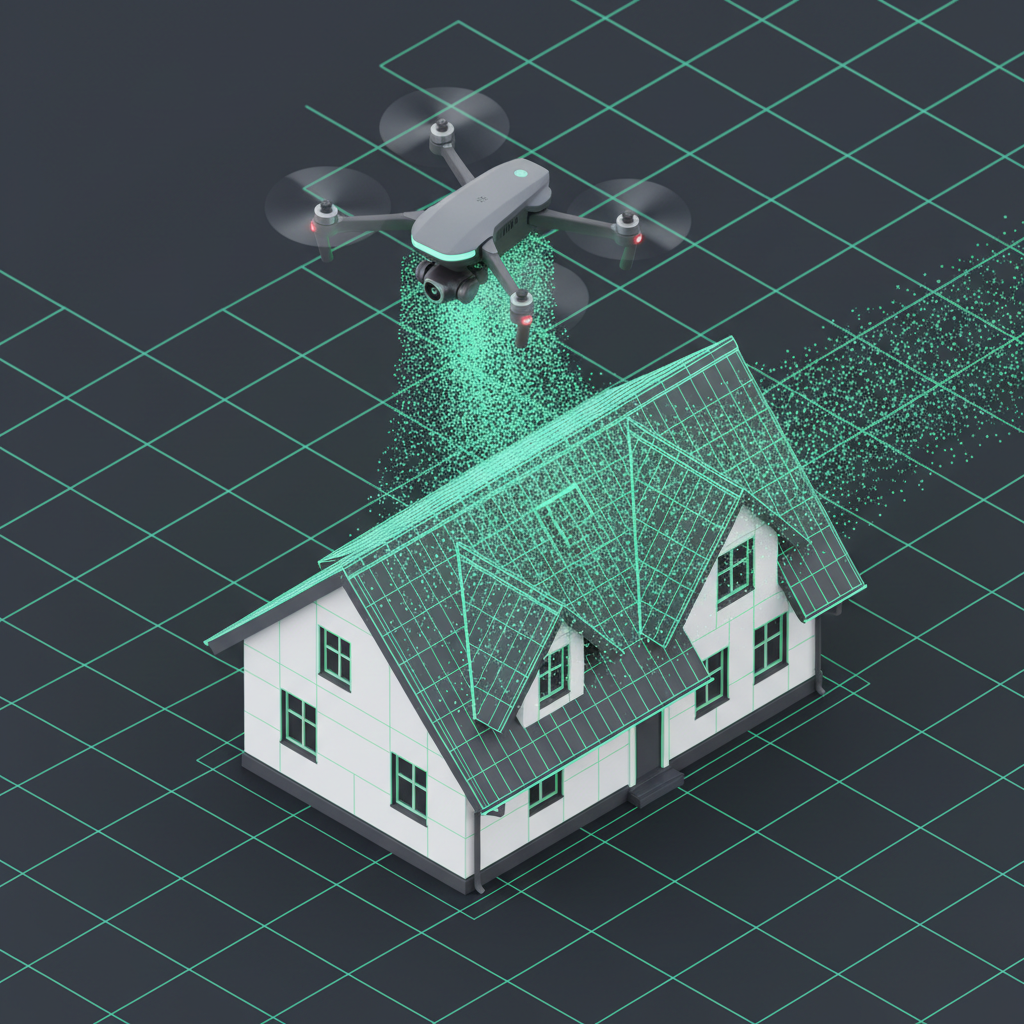
In the Airteam webinar with master roofer Niklas Bothe (Bothe Bedachungen), it became clear how drones and AI are fundamentally changing this process: away from paper notes, tape measures, and Google images - toward digital 3D roof models and standards-certified surveying reports generated in less than 24 hours.
This article summarizes the key insights from the webinar and, using Bothe Bedachungen's day-to-day work as an example, shows what is already possible in roof measurement today.
Why use drones and AI in the trades at all?
Thomas Bücheler, founder and CEO of Airteam, gets straight to the point in the webinar: every construction project needs quantity takeoff - for quotations, final invoicing, ordering materials, or estimation. Traditionally, this is done:
- with measuring tape and folding ruler
- with a laser distance meter
- or - semi-digital - via Google Earth and satellite imagery
That works, but it is:
- time-consuming (especially for complex roofs)
- risky (climbing ladders, scaffolding, or the roof itself)
- error-prone (missing dimensions, rough estimates, inaccurate or outdated satellite images)
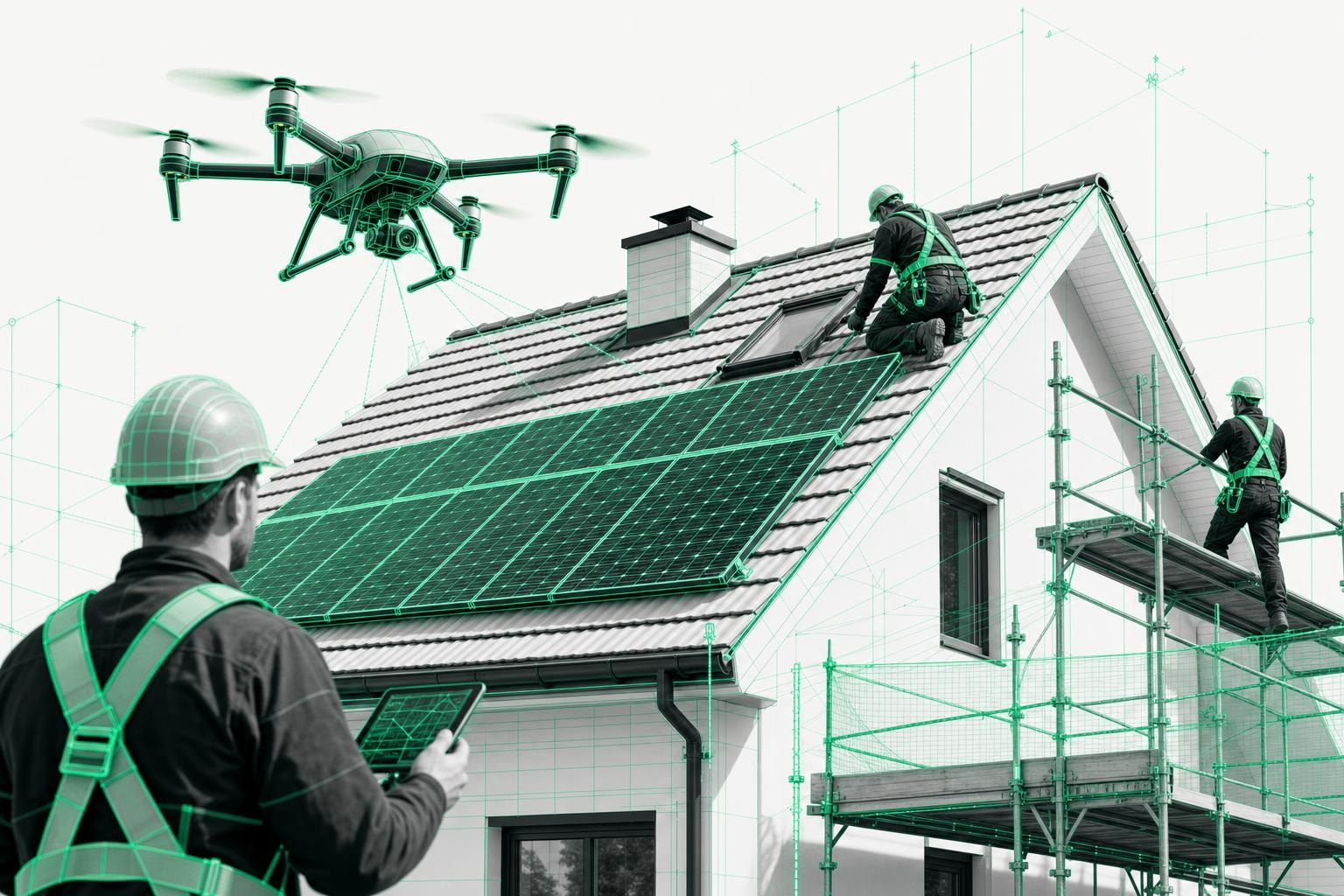
Thomas points out in the webinar that there are tens of thousands of ladder accidents in construction every year - and this is exactly where Airteam comes in: everything that is only measurement and inspection can now be done safely from the ground.
At the same time, satellite images are often outdated or too coarse. New chimneys, additional roof windows, or grown trees that cause shading for PV systems: the drone captures all of this in up-to-date, high resolution - Google does not.
From drone flight to 3D roof model: how the process works
The nice thing is that the technical workflow is much simpler than many initially think. Thomas describes the flight like this:
- Unpack the drone - fold out the propellers, switch on the controller.
- Ascend above the building - around 5-10 m above the highest roof surface.
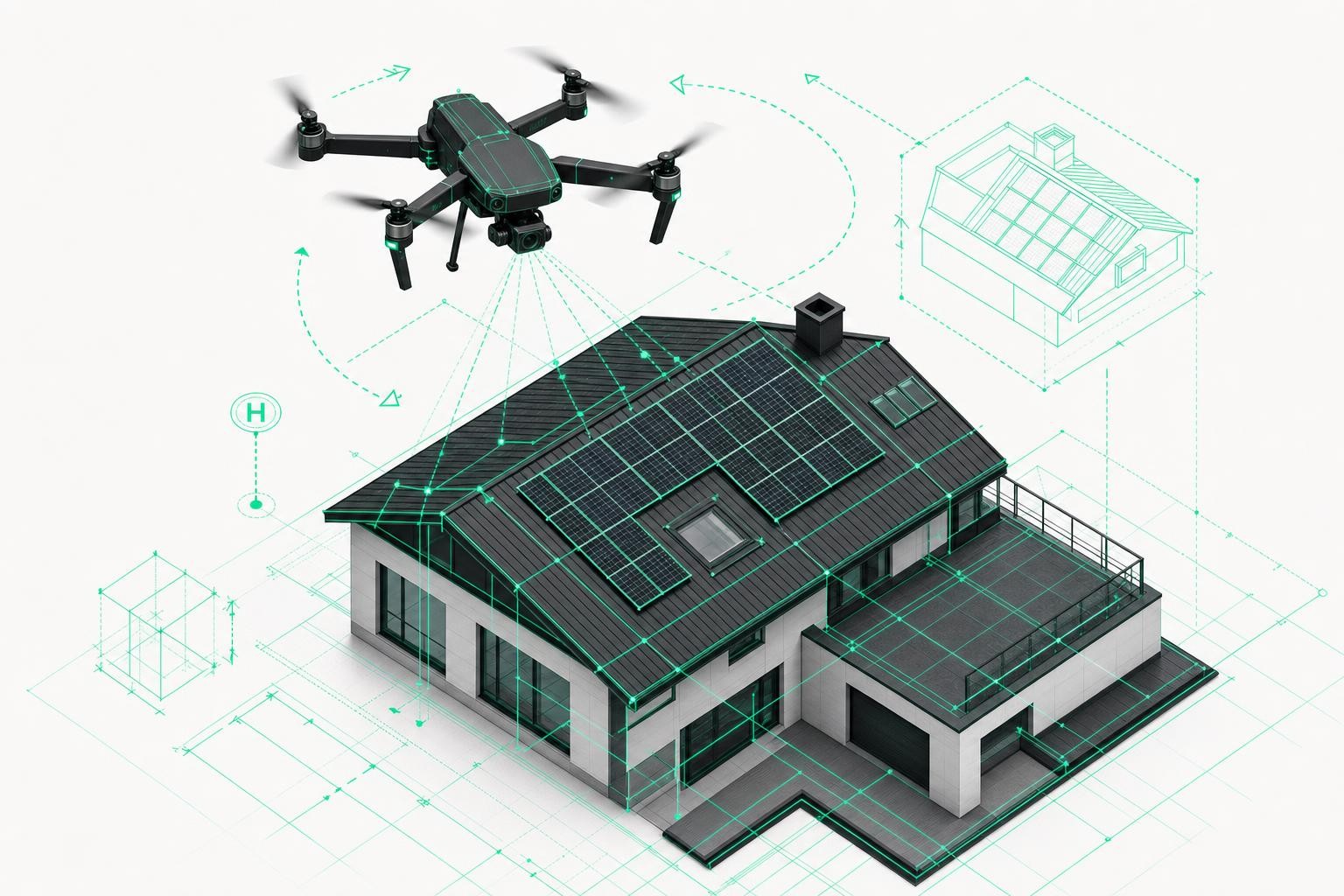
- Start hyperlapse / orbit flight - mark the building on the display, select the number of images (e.g. 75 photos).
- Automatic flight - the drone flies around the object autonomously and takes the photos.
- Upload - upload the images to the Airteam Fusion platform.
- AI analysis - within a maximum of 24 hours, a complete 3D building model with measurement data is created.
Airteam uses off-the-shelf DJI drones (e.g. DJI Mini / Flip, Mavic 3 Enterprise C1, or Mavic 3T with thermal imaging). From the photos, the AI generates centimeter-accurate 3D models, optionally including a standards-certified surveying report with all lengths, areas, roof pitches, and penetrations.
"I measure every building I visit"
Master roofer Niklas Bothe has been using Airteam for around two and a half years - and has completely transformed how he measures roofs:
For me, I measure every building I visit. It does not matter whether it is for an inspection, a new roof covering, or just maintenance.
His process during a customer appointment:
- Discuss the new roof / PV system
- The customer expects a classic measurement ("You still have to measure now...")
- Niklas:
No, I am going to my car now, getting my helicopter, and creating a 3D model of your house.
The reaction: wide eyes - and a clear competitive differentiator compared with other companies in the region.
For a typical single-family home he needs:
- around 4 minutes for the flight
- 10-15 minutes in total, including unpacking and upload
The Airteam AI often delivers the model after just 2-3 hours, but always within 24 hours.
Working with scaffolders and PV planners: everyone uses the same model
A major lever in Bothe Bedachungen's day-to-day work is collaboration with partners:
- Scaffolding companies
- Suppliers / planners of photovoltaic systems
Niklas creates the 3D model and then uses the share function in the Airteam Fusion platform:
I send my scaffolder and my supplier the link by email - and both have access to the 3D model for 12 months.
The benefits:
- The scaffolder can see eave heights and lengths immediately in the model and can calculate without another site visit.
- The PV partner designs the module layout directly based on the Airteam model.
- Niklas himself focuses on roof measurement and roofing work - the PV design is handled by the specialist.
According to Niklas, this means quotes are usually ready within three days - from initial measurement to the email sent to the customer.
Complex roofs: when the surveying report is worth its weight in gold
For simple gable roofs, Niklas measures many things directly in the 3D model. But Airteam really comes into its own on complex buildings:
Example 1: Church tower renovation with twin towers
- Height: around 30 m
- Many valleys, intersections, slate covering
- Goal: verify quantities in the bill of quantities and accurately determine slate requirements
Doing this by hand is practically impossible. You need scaffolding, at least two people, and half a day just to get the measurements on paper somehow.
With Airteam, he captured the towers by drone and ordered the surveying report. The result:
- Detailed list of all lengths (eaves, ridges, hips, valleys)
- Area breakdown for every individual roof section (38 surfaces)
- Roof pitches, penetrations, everything color coded
This allowed him to verify the quantities in the bill of quantities and place the slate order with confidence.
Example 2: Slate roof under construction
Niklas also uses the technology for interim measurements while a project is in progress:
Instead of my foreman spending hours with measuring tape and laser on the roof, I get the 3D model in 4 minutes and have the dimensions I need for the slate order in 15 minutes.
Digital inspection: detecting damage without setting foot on the roof
Alongside measurement, inspection is playing an increasingly important role. Airteam offers a single-image function for this:
- Every individual image from the drone flight can be opened at full resolution.
- With one click on a point in the 3D model, you jump directly to the original photo.
In the live example during the webinar, Niklas happened to spot a loose ridge tile:
There is a ridge tile... That was pure coincidence, but that is exactly the point: I can document this defect comfortably from the office.
Depending on the drone and flight distance, damage down to a few centimeters is clearly visible. For thermal analysis (e.g. thermal bridges), companies can use drones such as the DJI Mavic 3T with a thermal camera.
Which drone setup is right for a roofing business?
The webinar makes it clear: you do not need high-end industrial hardware to get started.
Typical setups:
- Entry level / single-family homes
- DJI Mini / Flip, e.g. Mini 4 Pro
- around 12-20 megapixel camera
- ideal for roof areas up to roughly 300 m²
- Larger / more complex buildings
- DJI Mavic 3 Enterprise C1 (with RTK antenna for even greater accuracy)
- Large industrial roofs and special cases
- DJI Matrice 4E / 4T - faster still, with even better sensors
Airteam offers ready-made starter kits including drone, training, and software access, as well as a pilot network: if you do not want to use your own drone, you can book a certified pilot who will capture the footage within about 48 hours.
A competitive edge with customers
Beyond safety and efficiency, digital measurement also acts as a sales argument:
- Professional, innovative appearance (the "helicopter" moment)
- Transparency in quantities and costing
- The ability to show customers 3D views and aerial photos of their own home
- A solid basis for accurate invoicing and clear documentation
In the webinar, Thomas reports that companies using 3D models often win more jobs per quote, because customer trust increases and the proposals are easier to understand.
FAQ: Common questions about using drones and AI for roof measurement
How long does roof measurement with a drone take in practice?
For a single-family home, Niklas Bothe assumes:
- 4 minutes of flight time
- 10-15 minutes total, including unpacking, setup, and upload
The 3D model from Airteam is ready within 24 hours at the latest, and often within just a few hours.
How accurate are the measurements?
Depending on the drone and setup, real-world deviations are within a few centimeters. Niklas has repeatedly compared dimensions from the model with on-site measurements and has "never had any significant deviations that would have turned the measurement upside down." Even roof window sizes can be determined this way.
Do I have to measure every roof - even simple gable roofs?
You do not have to - but you can. Bothe Bedachungen consistently measures every roof, whether it is a complex landscape of dormers or a simple gable roof. The reason: a standardized process, full planning reliability, and always the option of using the data later for PV, maintenance, or documentation.
What if I do not yet have my own drone?
You have two options:
- Book an Airteam pilot - a certified pilot comes to the site and delivers the finished data.
- Use a starter kit - drone, training, and software from a single source, so you can start flying yourself the very next day.
Conclusion: Drone instead of ladder - time to get started and try it out
The webinar with Bothe Bedachungen makes one thing very clear: drones and AI are not "toys," but a productive tool that saves time, prevents accidents, and visibly improves quality in the trades.
- Up to 90% less time spent on measurement
- No ladder climbing for measurement
- Centimeter-accurate 3D models and standards-compliant surveying reports
- Direct export into common roofing and PV software
If you want to experience what this feels like in your own business:
Try it for free now:
Register with Airteam, use the 14-day trial, and create your first 3D models - using real projects or sample buildings provided for you.