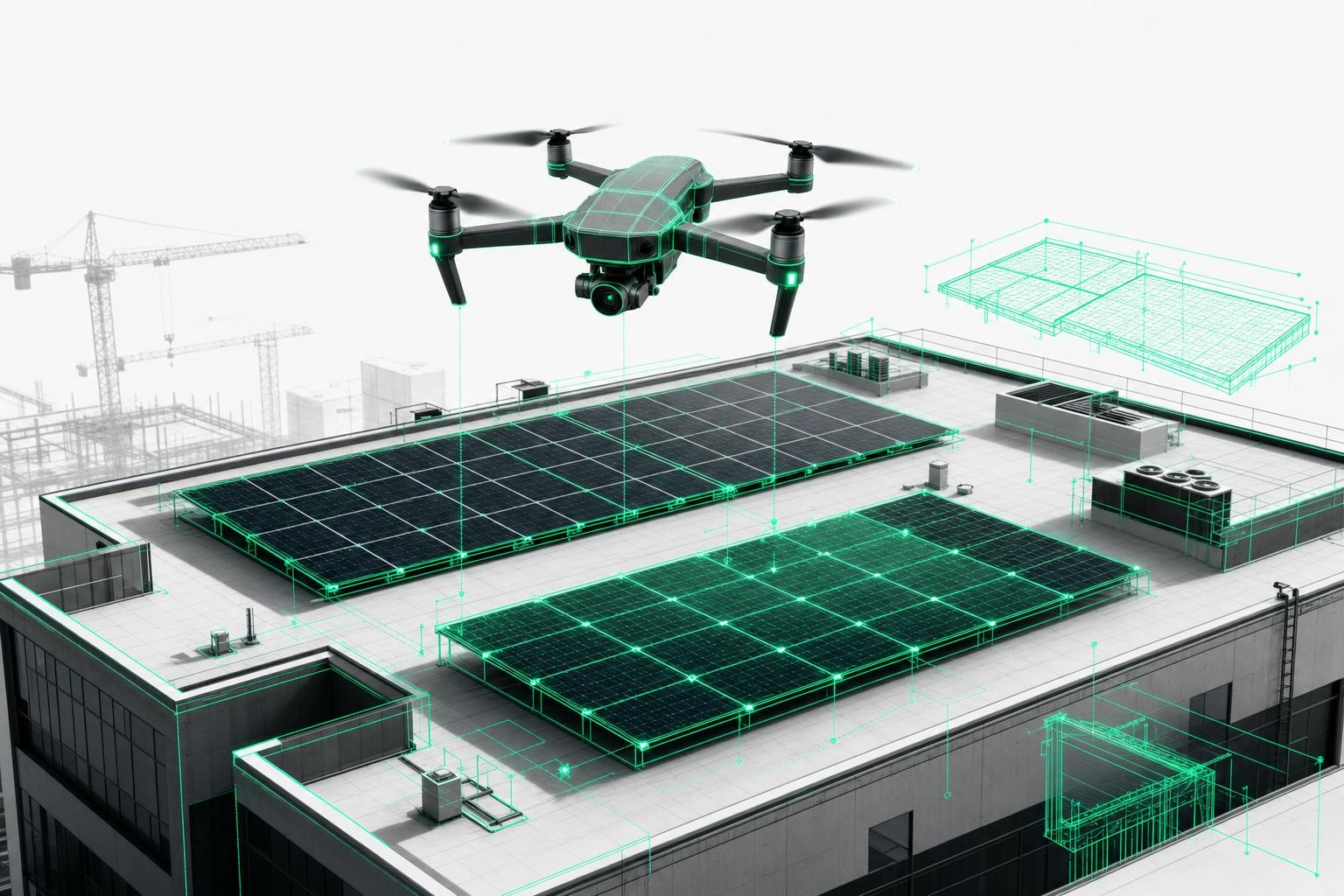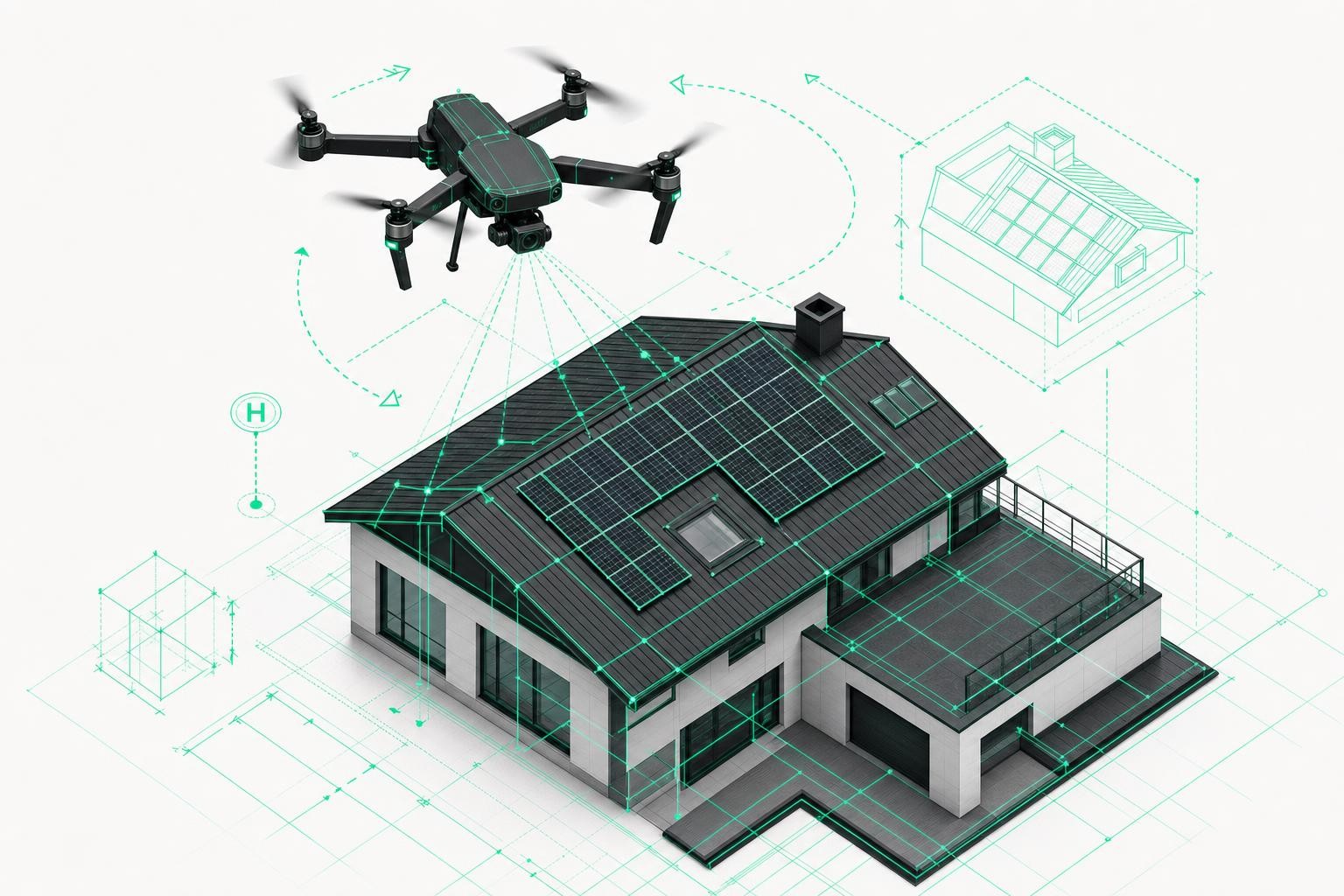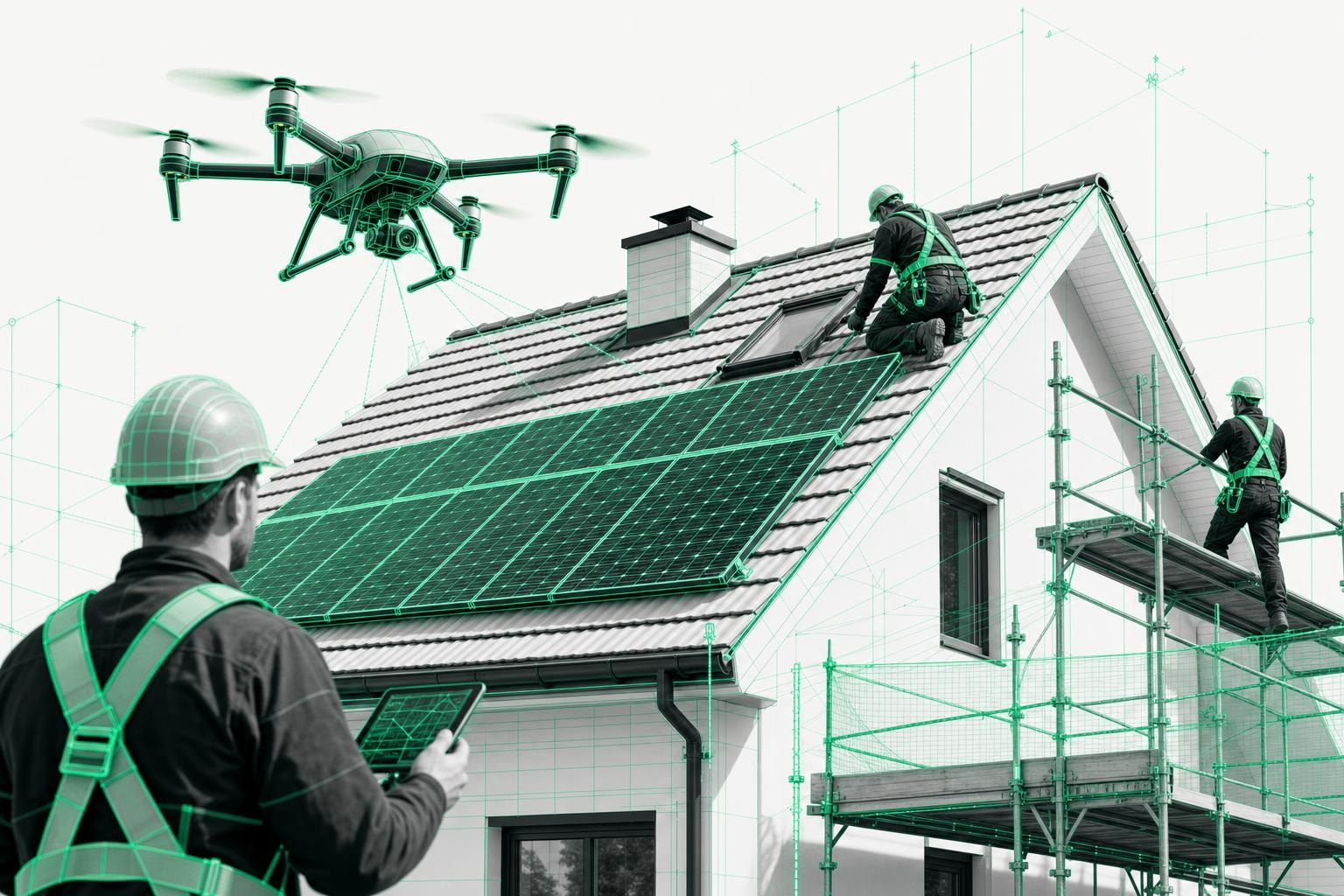
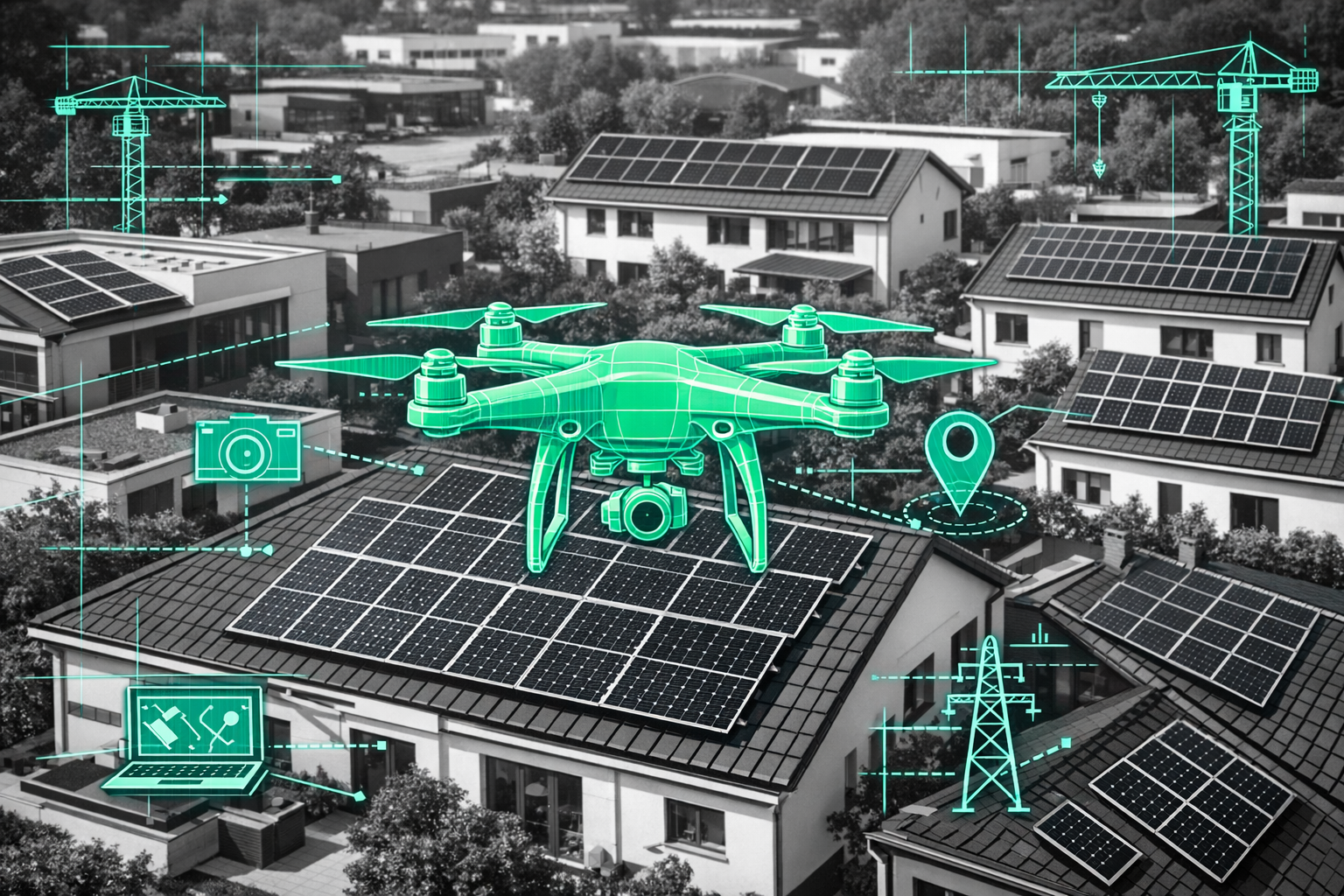
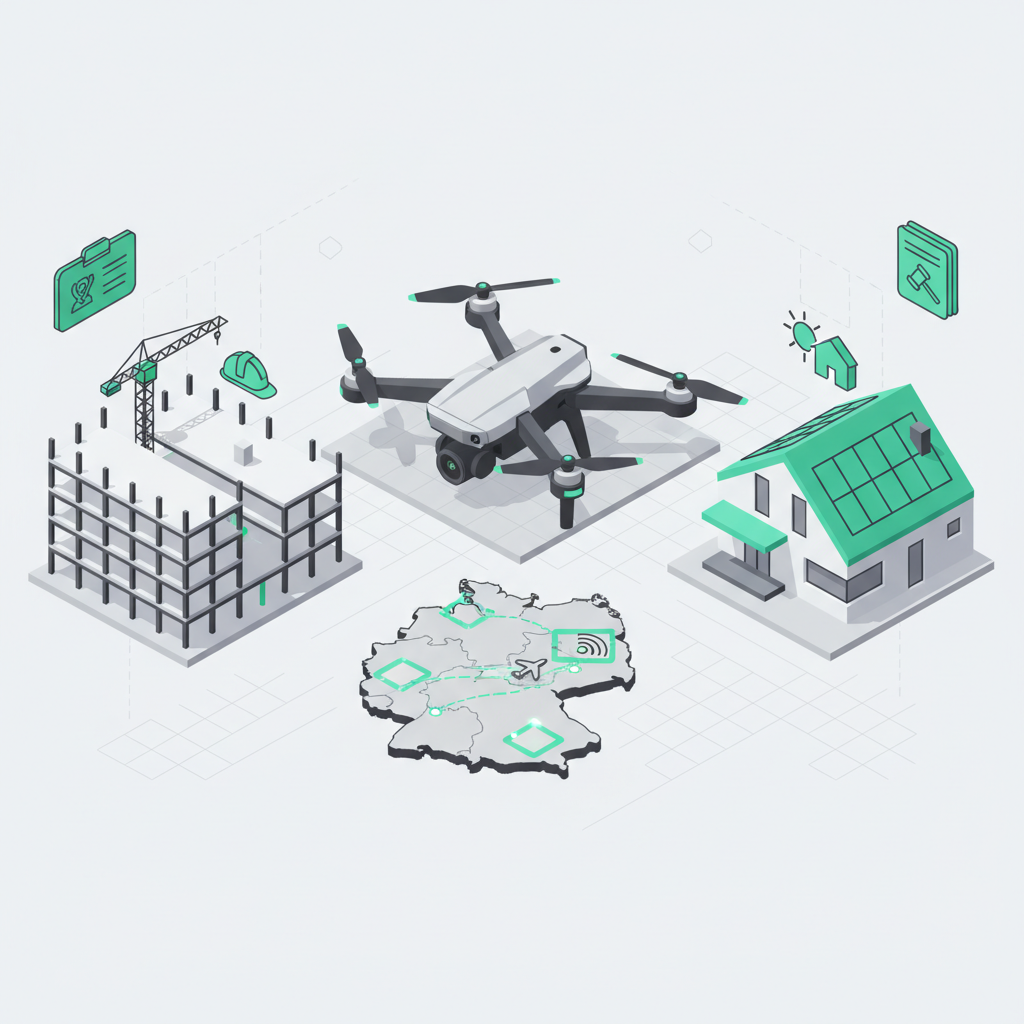
The bird's-eye view opens up completely new possibilities for trades businesses, real estate marketing, and construction projects. But since the EU drone regulation came into force in 2024, the complex legal framework and technical challenges have put many people off. This comprehensive guide walks you through how to work with drone footage in a legally compliant and professional way - from proper licensing to optimal image quality. The opportunities are especially significant for roofing companies, solar installers, and construction firms, enabling safer and faster workflows.
Legal Framework: EU Drone Regulation 2024/2025
Since 1 January 2024, stricter rules for drone flights have applied in Germany and across the EU. The full implementation of the EU drone regulation introduces a CE marking requirement for all new drones. While this harmonisation of rules creates more clarity, it also demands careful preparation before every flight. Drones without a class label can still be flown, but only in the weight-based subcategories A1 (under 250 g) or A3 (under 25 kg).
Understanding Drone Classes and Categories
The EU divides drones into seven classes: The open category covers classes C0 to C4, while the specific category includes classes C5 and C6 for more complex operations. For commercial use, classes C0 to C4 are the most relevant. Class C0 includes drones under 250 grams and does not require a licence, but registration is mandatory for commercial use. Class C1 (under 900 grams) requires the basic EU certificate of competence and may fly in category A1 up to 50 metres above people. Class C2 (up to 4 kg) requires the advanced drone licence and is limited to category A2, with a minimum distance of 30 metres from people. Class C3 (up to 25 kg) may only fly in category A3, with a minimum distance of 150 metres from residential, commercial, and industrial areas.
Overview of drone classes:
| Class | Weight | Licence | Category | Area of use |
|---|---|---|---|---|
| C0 | < 250 g | None | A1 | Everywhere except no-fly zones |
| C1 | < 900 g | Basic | A1 | Over people (50 m distance) |
| C2 | < 4 kg | Advanced | A2 | 30 m distance from people |
| C3 | < 25 kg | Advanced | A3 | 150 m distance from residential areas |
Drone Licence: Basic vs Advanced EU Certificate
The EU certificate of competence A1/A3 (basic licence) costs 25 euros at the German Federal Aviation Office (LBA) and is completed online. It entitles you to fly C0 and C1 drones in categories A1 and A3. It is valid for five years. The EU remote pilot certificate (advanced licence) also requires a practical exam at an approved organisation. The exam fee at the LBA is 30 euros, but additional training costs at private providers typically range from 200 to 890 euros. This certificate also entitles you to fly in category A2. Both licences are recognised throughout the EU and can be obtained from authorised exam organisations such as DMFV or TÜV.
Insurance and Registration
Every drone operator must register with the German Federal Aviation Office (LBA). The registration number must be affixed to every drone. Drone liability insurance is required by law - the minimum coverage amount is approximately 900,000 euros (750,000 SDR), but for commercial users, coverage of 1 million euros or more is recommended. Many insurers offer policies up to 50 million euros. Commercial users should also consider hull insurance for the drone itself. From 2024 onwards, the remote ID function is mandatory for new drones in classes C1-C3 with CE marking, to enable clear electronic identification during flight. For older drones without class labels, remote ID is recommended but not mandatory.
Use Cases for Drone Footage
Real Estate and Construction
Real estate marketing benefits enormously from aerial perspectives. Aerial images offer a complete overview of the property and its surroundings that simply isn't possible from the ground. Prospective buyers get an honest impression of the location, neighbourhood, and condition of the property. 3D visualisations enable virtual tours and make listings stand out clearly from the competition. Real estate agents report significantly higher inquiry rates for listings that include professional aerial imagery.
Construction documentation and monitoring are being transformed by regular drone flights. Construction progress can be documented precisely, hard-to-reach areas can be inspected safely, and 3D models can be created for further planning. Especially for roofing work, facade renovations, or large construction sites, drone footage saves considerable time and cost. Instead of elaborate scaffolding or risky climbing, drones provide complete overviews within minutes. The data collected also supports quality assurance and communication with clients or authorities.
Inspections and Maintenance
Technical inspections using drones eliminate the risks associated with ladders and scaffolding. Roof and facade checks become safer, faster, and more economical. For solar installations, drones equipped with thermal cameras can detect defective modules without having to step onto the system. Industrial facilities, bridges, wind turbines, and other infrastructure assets can be monitored with high precision. High-resolution documentation helps with insurance claims, maintenance planning, and communication with specialist contractors. Many trades businesses already use drone imagery as the basis for quotations, significantly reducing the need for recalculations later on.
Event Coverage and Live Documentation
Event footage shot from the air creates striking perspectives for organisers and marketing teams. Overview shots show the scale of events and help with the planning of future ones. For organisers, aerial images are valuable documentation for authorities, sponsors, and internal performance reviews. However, special regulations apply when people gather in crowds: minimum distances must be maintained, and special permits are often required.
Technical Essentials for High-Quality Drone Footage
Camera Settings and Image Quality
Manual settings are critical for image quality. ISO should be kept as low as possible to avoid noise - ideally between 100 and 400. For video, the rule of thumb is: shutter speed should be double the frame rate (25 fps = 1/50 s). An aperture range of f/4 to f/5.6 delivers the best sharpness on most drones, as this helps minimise optical lens imperfections. Shooting in RAW preserves far more image information than JPEG and enables professional post-production - essential in challenging lighting conditions.
Filters and accessories can significantly improve image quality. ND filters (neutral density filters) reduce the amount of light reaching the sensor and make it possible to maintain optimal shutter speeds even in bright sunlight. Polarising filters cut down unwanted reflections from water, glass, or wet surfaces. You should have a range of filters for different lighting conditions: ND4 to ND16 for normal situations, stronger ND32 or ND64 filters for very bright sunlight.
Planning and Preparation
A pre-flight checklist helps prevent costly mistakes and accidents. Check weather conditions: wind speed below 10 m/s, no precipitation, and adequate visibility. Check battery level and memory cards - always carry spare batteries and cards. Plan your flight route in advance and identify potential landing sites. Develop backup plans for technical issues or sudden weather changes. Apps such as "UAV Forecast" or "Windy" are helpful for assessing weather conditions.
Shoot planning starts with choosing the right time of day. The "golden hour" shortly after sunrise or before sunset offers the most attractive light, with warm tones and soft shadows. Composition should follow tried-and-tested rules such as the rule of thirds or leading lines. Movements for video should be slow and smooth - your drone is not a race car. Build in generous safety margins to buildings, trees, and other obstacles.
Avoiding Common Quality Issues
Typical mistakes cost time and money. Overexposure in direct sunlight can be avoided with ND filters or manual exposure compensation. Shaky footage is often caused by high wind speeds or abrupt stick movements - smooth, consistent manoeuvres are essential. Incorrect focus in automatic mode can occur with low-contrast subjects - manual focus set to infinity is usually the better choice. Composition mistakes such as tilted horizons or awkward framing can be reduced through practice and attention to detail.
Practical Tips for Professional Drone Footage
Safety First
Safety rules protect people and property. VLOS (Visual Line of Sight) means the drone must always be visible to the naked eye. Maintain minimum distances: at least 30 metres from people (except for C0/C1 in A1), and 150 metres from residential areas for A3 flights. Know your emergency procedures: activate Return-to-Home, perform an emergency landing, keep airspace clear. Respect weather limits: do not fly in rain, fog, or strong winds (over 10 m/s).
Post-Production and Workflow
Post-production enhances your raw footage. Adobe Lightroom is excellent for photo editing, while DaVinci Resolve is a professional, free video editing suite. Colour correction and exposure adjustments compensate for the limitations of small drone sensors. For video, digital stabilisation in software is often more effective than relying solely on the camera's mechanical gimbal stabilisation. Delivery formats depend on how the footage will be used: 4K for high-end presentations, Full HD for web and social media, compressed formats for rapid transfer.
FAQ - Frequently Asked Questions
Q1: Which drone is best suited for commercial shoots?
A: For commercial applications, CE-certified drones in classes C1-C3 with professional cameras, a 3-axis gimbal, and reliable safety features are recommended. The DJI Mini 3 Pro (C1) or DJI Air 2S (C2) offer a good price-performance ratio.
Q2: Am I allowed to fly my drone anywhere in Germany?
A: No, there are numerous no-fly zones such as airports (up to a radius of 1.5 km), nature reserves, industrial facilities, and crowds of people. Always check local regulations in advance with apps such as "DFS-DrohnenApp" or "Map2Fly".
Q3: How much do professional drone shoots cost?
A: Costs vary depending on project scope, region, and provider. Once you have purchased your equipment and obtained the necessary licences, in-house drone shoots mainly cost your own time, while external service providers generally bill on a daily or per-project basis.
Q4: Do I need a permit for commercial drone flights?
A: For commercial use, registration with the LBA is mandatory and, depending on the drone class, an appropriate licence is required. In special areas such as controlled airspace or over crowds, additional individual permits may be necessary.
Q5: What insurance do I need for drone operations?
A: Drone liability insurance is legally required - minimum coverage is around 900,000 euros, but 1 million euros or more is recommended. Commercial users should also consider hull insurance to cover damage to the drone itself.
Conclusion: Successful Drone Footage in Germany
In 2025, drone footage in Germany requires a careful balance of legal compliance, technical expertise, and hands-on experience. The EU drone regulation provides a uniform legal framework but also demands conscientious preparation for every flight. High technical quality comes from the right combination of manual camera settings, thoughtful flight planning, and professional post-production. Use cases range from real estate marketing and construction documentation to inspections, offering enormous potential for efficiency gains. Trades businesses in particular benefit from being able to carry out hazardous work safely from the ground and to produce precise measurements for standard-compliant quotations. The future lies in integrating drone footage into digital workflows - those who get started now will secure a competitive edge for the coming years.
Sources & Facts:
[S1] EASA/Applus Laboratories - EU Drone Certification: Brief Guide to the New CE Marking Process (2024): https://www.appluslaboratories.com/global/en/news/publications/eu-drone-certification-brief-guide-new-ce-marking-process
[S2] DFS Deutsche Flugsicherung - Checklist for Drone Pilots (2024): https://www.dfs.de/homepage/en/drone-flight/checklist-for-drone-pilots/
[S3] Drone Laws Database - Drone Laws in Germany (2024): https://drone-laws.com/drone-laws-in-germany/
[S4] U.S. Trade Administration - Germany Aerospace Civil Drone Market Analysis (2024): https://www.trade.gov/market-intelligence/germany-aerospace-civil-drone-market
[S5] Delegated Regulation (EU) 2019/945 - Unmanned Aircraft Systems and Third-Country Operators: Official classification of drone classes C0-C6
Note: Specific performance metrics and cost figures are based on market observations and may vary by region. Legal requirements can change - always check the latest regulations with the LBA or the competent aviation authority.