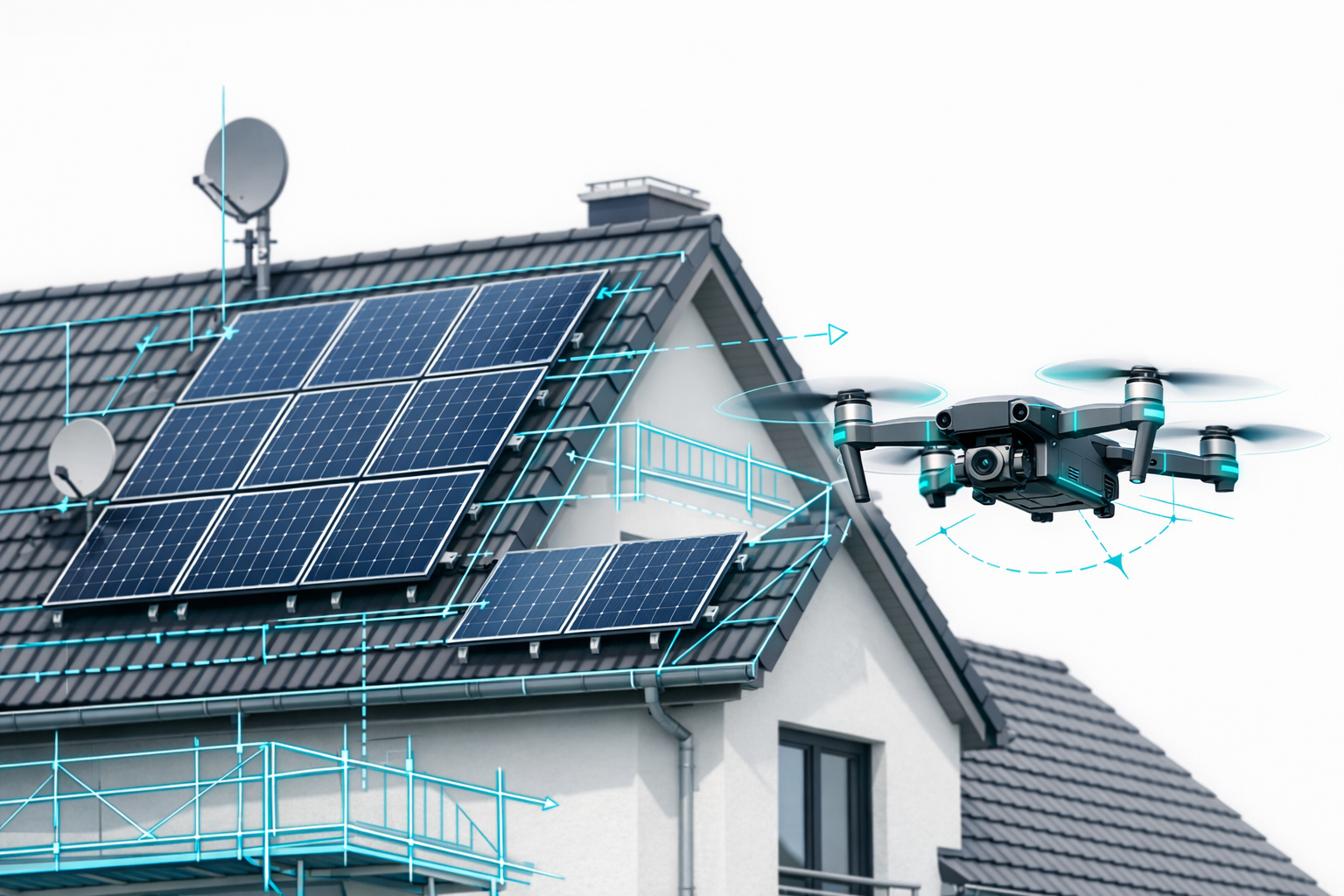
2026 is a pivotal year for drone footage and solar PV systems in Germany: the EU drone rules now apply in full, the first drone licenses are expiring, and many federal states are tightening their solar roof mandates. This overview gives you a compact, practical guide to what now matters legally for private flights, professional drone operations, and PV systems - especially for trades, the solar industry, and the real estate sector.
2026 at a Glance: Drones & PV in Legal Transition
Since 1 January 2024, drone pilots in the open category have been required to fully comply with the EU Drone Regulation (Regulation 2019/947) and the C0-C4 drone classes - uniformly across all EU member states. For 2026, this means: transitional rules for many existing drones expire or are severely restricted, and new drones are now almost exclusively available with CE class markings.
EU drone licenses (the A1/A3 certificate of competency and the A2 remote pilot certificate) are each valid for five years; the first licenses issued in 2020 therefore need to be renewed between the end of 2025 and early 2026. If you use drones for roof surveys, PV inspections, or facade work, you should review your licenses and operating procedures in a targeted way in 2026.
On the PV side, the pressure is increasing to connect more systems safely to the grid: with the Renewable Energy Sources Act (EEG) 2023 and the amendments adopted in 2024, annual PV expansion is intended to reach around 22 GW by 2026; by 2030, a total installed PV capacity of 215 GW is planned. More and more federal states are introducing a solar roof mandate for new builds and roof refurbishments.
Drone Regulations in Germany 2026
Drone regulations in Germany will follow the EU Drone Regulation in full from 2026. For you - whether private or commercial - the following applies in the open category (OPEN):
- 120 m maximum flight altitude, flights only within visual line of sight
- Three subcategories A1, A2, A3 with graduated minimum distances to people and built-up areas
- Drone classes C0-C4 with defined areas of operation
Registration, eID, and Drone Insurance
Since late 2020, drones from 250 g upwards or equipped with a camera must be registered with the German Federal Aviation Office (Luftfahrt-Bundesamt, LBA). Operators receive an electronic operator ID (eID), which must be affixed to the drone in a clearly visible way. Airteam summarizes these requirements in a practical guide for light drones.
Regardless of weight, Germany requires liability insurance without exception for every aircraft - including recreational drones and multicopters used in commercial settings. Drone insurance is therefore a legal prerequisite for any flight.
Additional key points:
- From as little as 250 g take-off mass, you need an EU A1/A3 competency certificate; many camera drones also require the A2 remote pilot certificate, especially for flights in residential areas or close to people.
- Flights over crowds, national parks, many nature reserves, airport control zones, and critical infrastructure are heavily restricted or completely prohibited.
Personal Footage: What Hobby Pilots Need to Know in 2026
With lightweight C0 drones (under 250 g), getting started remains relatively straightforward:
- Drones under 250 g do not require an EU drone license in the open category; however, camera drones in this range must still comply with registration and insurance requirements.
- Even with mini drones, you must respect data protection, privacy rights, and no-fly zones - "small" does not mean "rule-free."
You can find more details in the Airteam guide "Drohne unter 250 g: Regeln, Pflichten & Flugzonen einfach erklärt".
Professional Use in Trades, Solar, and Real Estate
In professional environments - roofers, solar installers, carpenters, scaffolders, surveyors - stricter requirements apply:
- Typically C1-C3 drones with high-resolution cameras, RTK, and thermal sensors
- Flights in residential areas, close to third parties, and over buildings generally require the A2 remote pilot certificate
- For special tasks (e.g. flights over people or critical infrastructure), you often need approvals under the specific category or must use standard scenarios from the relevant state aviation authority.
Obligations in 2026 Compared: Private vs. Professional
| Topic | Private (hobby) | Professional (trades, solar, surveyors) |
|---|---|---|
| Typical drone class | C0/C1, < 900 g | C1-C3, often with RTK, zoom/IR |
| Registration (eID) | Mandatory from 250 g or with camera | Always mandatory, often multiple drones per operator |
| Drone license | A1/A3 from 250 g, A2 for flights close to people | In residential areas almost always A2, sometimes extra STS training |
| Insurance | Private drone liability add-on, limited coverage | Commercial drone insurance, high coverage limit, activity cover |
| Documentation & survey | Optional, mostly photos/video | Mandatory (quotes, PV design, reports); structured survey and flight documentation |
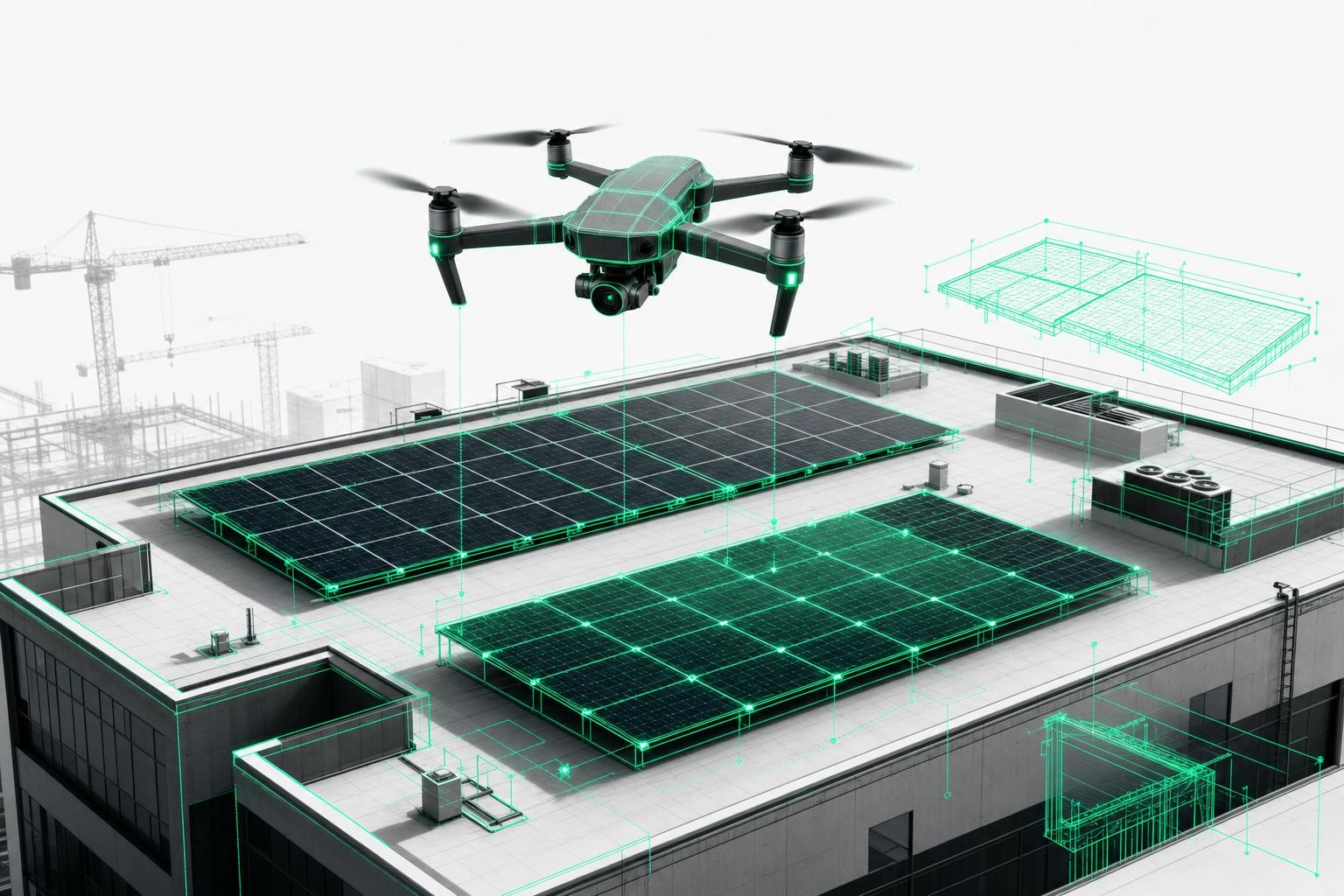
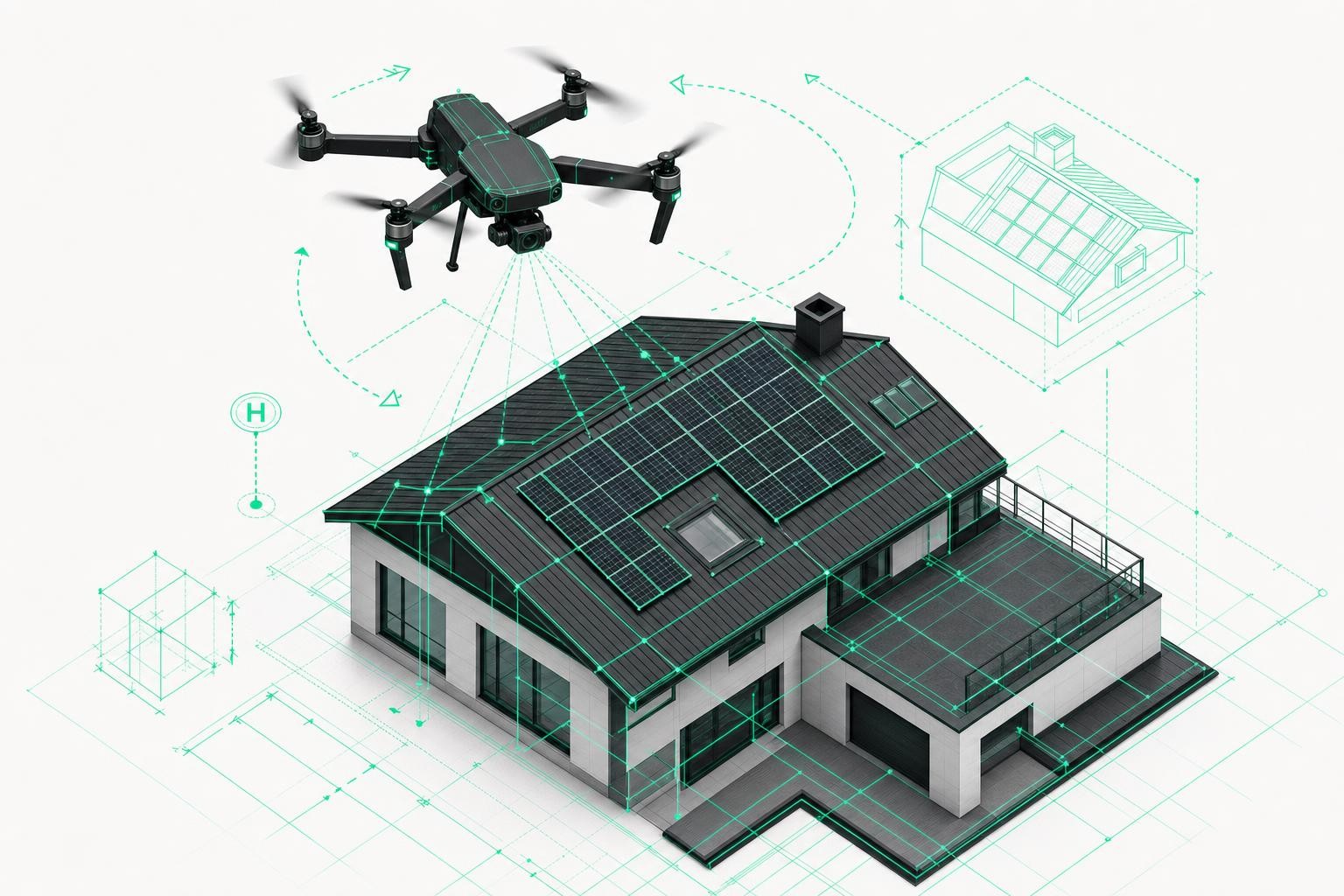
In professional settings, safe flying alone is not enough. Project data must be DIN-compliant, transparent, and compatible with standard industry software. This is exactly where Airteam comes in: the Airteam Fusion platform automatically converts drone imagery into certified 3D building models for PV design, scaffolding, and timber construction - exportable in widely used formats.
Depending on the setup, Airteam achieves accuracies of up to 99.9% with 1-3 cm tolerance (at around 40 m flight altitude) and typically reduces surveying effort by up to 90% compared with traditional methods. Learn more in the article "Standardisiert, präzise, zukunftssicher - Airteam bringt DIN-konformes Aufmaß in die Luft".
Photovoltaic Laws 2026: EEG, Taxes & Solar Roof Mandates
Federal Law: EEG 2023/24, Tax Relief, and Expansion Targets
Every grid-connected PV system falls under the EEG 2023 in 2026; as an operator, you are entitled to a feed-in tariff or market premium, provided the system is properly registered.
Financial key points:
- Since 2023, the supply and installation of many PV systems on residential buildings are subject to a 0% VAT rate.
- Systems up to 30 kWp are, under the 2024 Annual Tax Act, generally exempt from income tax on feed-in revenues - retroactively for systems installed from 1 January 2022.
- New EEG amendments (the "Solar Package I") simplify direct marketing for small systems and regulate negative electricity prices, especially for upcoming tender years.
PV system regulations: From a tax perspective, many aspects are becoming easier. However, you must still comply with grid connection rules, the Market Master Data Register, and technical requirements (for example, feed-in limitation without a separate control box).
State Law: Solar Roof Mandates in Selected Federal States
In addition to federal legislation, state building codes increasingly determine whether and how you must install a PV system. Examples include:
- Baden-Württemberg: Solar PV is mandatory for new residential and non-residential buildings since 2022 and for roof refurbishments since 2023. There is also an ongoing obligation for many new open parking areas with 35 or more parking spaces.
- Berlin: Solar obligations for new builds and major roof renovations have been in force since 2023 under the Berlin Solar Act.
- Hamburg: Solar PV is mandatory for new non-residential buildings and certain parking facilities, regulated by the Climate Protection Act and associated ordinances.
- Schleswig-Holstein: Solar PV obligations apply for new builds and roof refurbishments of many non-residential buildings, from 10% roof surface renewal or more.
- Other states: (including Lower Saxony, North Rhine-Westphalia, Hesse) have introduced obligations for commercial new builds or public buildings, or have similar legislation in the pipeline.
For trades and solar companies, the key question is therefore often no longer "if," but "how large" the system should be. Accurate roof surveying and shade analysis - for example with "Mit Drohne und AI zur perfekten PV-Planung" - are becoming critical success factors.
Practical 2026 Checklist: Step-by-Step Guidance
Private flights (hobby, social media):
- Check drone weight and CE class (C0-C4), determine the appropriate subcategory (A1-A3)
- Register online with the LBA, attach your eID, and keep proof of insurance ready
- Check no-fly zones (DFS map, DIPUL portal) as well as nature conservation and data protection requirements
- For light drones, see additional information in the Airteam article "Drohne unter 250 g"
Professionals (roofers, solar installers, carpenters, scaffolders):
- Check expiry dates of your A1/A3 and A2 certificates and plan renewals in good time (first expiries from the end of 2025)
- Take out commercial drone liability insurance with sufficient coverage and an activity profile tailored to your work
- Standardize fleet and project workflows: drone classes, documentation, data export into PV*SOL, MF Dach, CAD, and other tools - for example via the Airteam Fusion platform
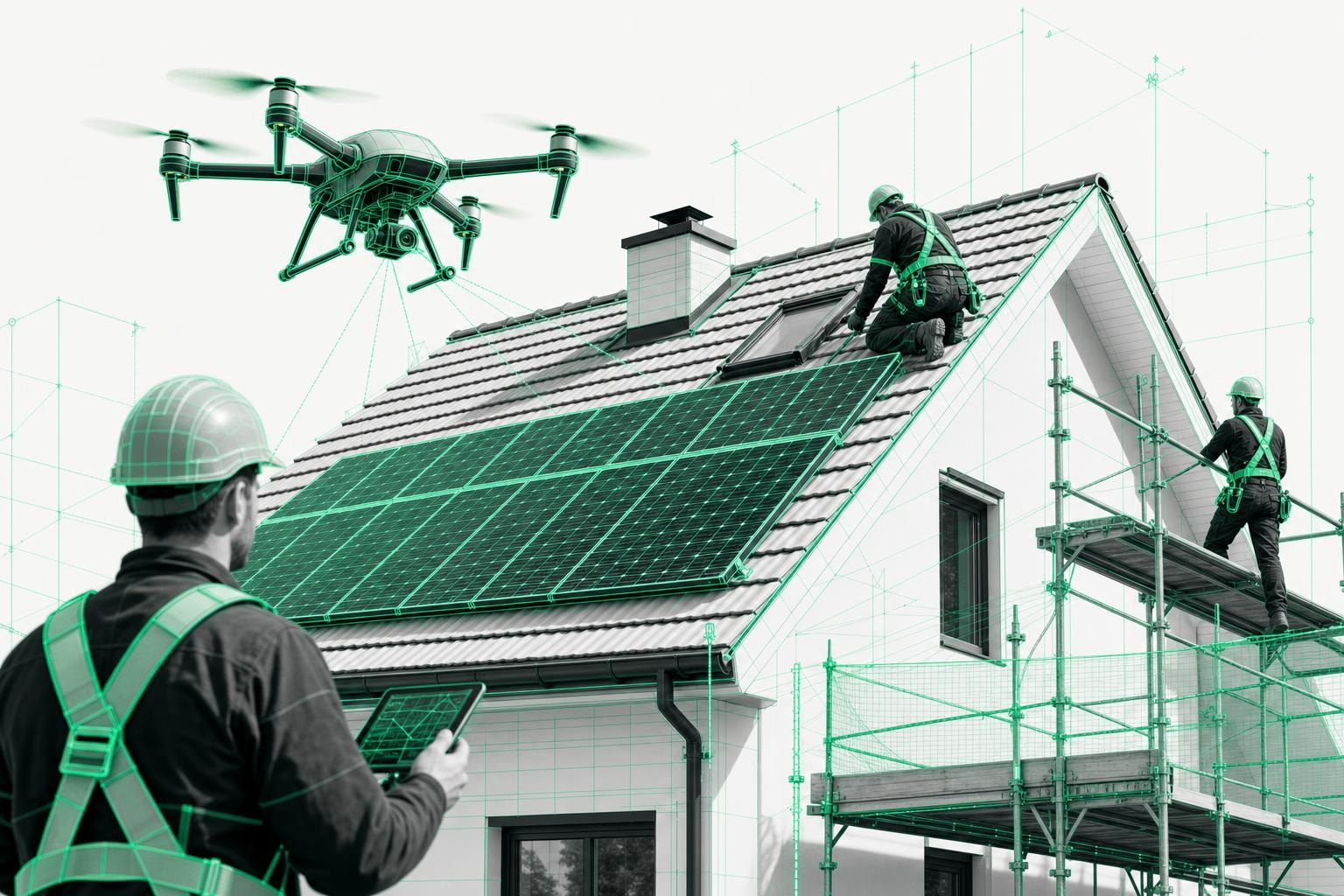
- Decide whether you want to handle surveying and PV planning from a single source using drones and AI: Airteam provides you with DIN-compliant digital surveys within 24 hours and significantly reduces your liability risk
Frequently Asked Questions
Do I need a drone license in 2026 if I only fly privately?
For private flights with very light C0 drones (< 250 g) and low-risk operations, no EU drone license is required. As soon as your drone has a camera or a take-off weight above 250 g, you need at least the A1/A3 competency certificate; for flights in residential areas or close to uninvolved persons, you will usually also need the A2 remote pilot certificate.
Is my personal liability insurance enough, or do I need dedicated drone insurance?
Many personal liability policies either do not cover drones at all or only cover them to a very limited extent. Aviation law requires dedicated liability insurance for every aircraft (including drones). Insurers often recommend a standalone drone insurance policy with at least €1 million in coverage - more for commercial use. In professional contexts, a separate commercial policy is mandatory.
Is there a single, uniform "Photovoltaic Law 2026" in Germany?
No. photovoltaic law 2026 essentially refers to the combination of EEG 2023 (including amendments in 2024/2025), tax relief (0% VAT, income tax exemption up to 30 kWp), and the respective solar roof obligations at state level. For your project, you must always consider federal and state law together.
As a trades business, how can I use drones legally for PV planning and inspection?
Build on three pillars:
- Legal: A2 drone license, eID registration, commercial drone insurance, and compliance with local rules
- Technology & data: A standardized drone fleet with CE classes, clear flight profiles, and digital surveys that are DIN-compliant and integrate seamlessly into your planning software - Airteam supports this with preconfigured workflows for roofs, PV, facades, and timber construction
- Processes: A fixed process covering flight planning, surveying, data checks, and quotation preparation. Airteam customers report time savings of up to 90% and significantly fewer survey errors in day-to-day work.
With this combination of drone regulations Germany, drone license, drone insurance, and PV regulations, you can build a scalable, legally compliant business model and position yourself as a digital front-runner.